



What's Happening?
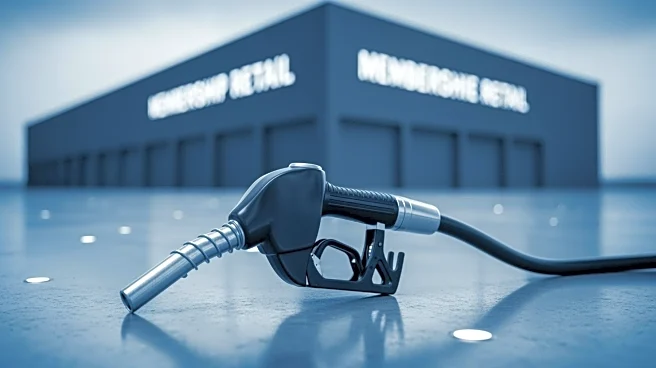
Costco is set to open its first standalone gas station in California in June 2026, marking a significant expansion in its fuel services. The new station, located in California, will be the largest of its kind for Costco, featuring 40 pumps and spanning
17,000 square feet. This facility will be exclusive to Costco members, who pay an annual fee of $65 or $130. The company plans to open another standalone gas station in Honolulu, Hawaii, in 2027. Wholesale clubs like Costco offer lower prices on gas due to membership fees and bulk purchasing, which allows them to maintain thin profit margins. This strategy results in gas prices at Costco being significantly lower than traditional gas stations, with savings of up to 56 cents per gallon in some regions.
Why It's Important?
The opening of standalone gas stations by Costco represents a strategic move to attract more members and increase foot traffic to its wholesale stores. By offering cheaper gas, Costco not only provides a tangible benefit to its members but also encourages them to make additional purchases at its warehouses. This approach could potentially increase Costco's market share in the fuel retail sector, challenging traditional gas stations. For consumers, the savings on fuel can offset the cost of a Costco membership, making it an attractive option for those looking to reduce their fuel expenses. This development also highlights the competitive nature of the wholesale club industry, where companies like Sam's Club and BJ's Wholesale Club also offer similar fuel discounts to their members.
What's Next?
As Costco expands its standalone gas station model, it is likely to continue exploring new locations to enhance its fuel services. The success of these stations could lead to further investments in similar projects, potentially increasing competition in the fuel retail market. Other wholesale clubs may respond by enhancing their own fuel offerings or membership benefits to retain and attract customers. Additionally, the expansion of Costco's gas stations could influence local fuel pricing dynamics, prompting traditional gas stations to adjust their pricing strategies to remain competitive.