
What's Happening?
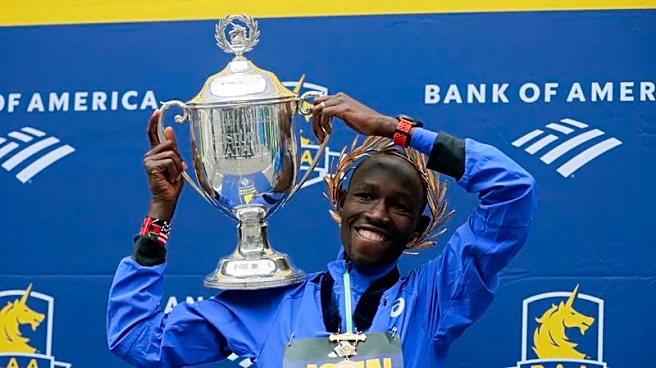
John Korir, a Kenyan athlete, broke the Boston Marathon course record, finishing the race in 2 hours, 1 minute, and 52 seconds. This achievement marks his second consecutive victory at the event. Korir's performance was aided by favorable weather conditions,
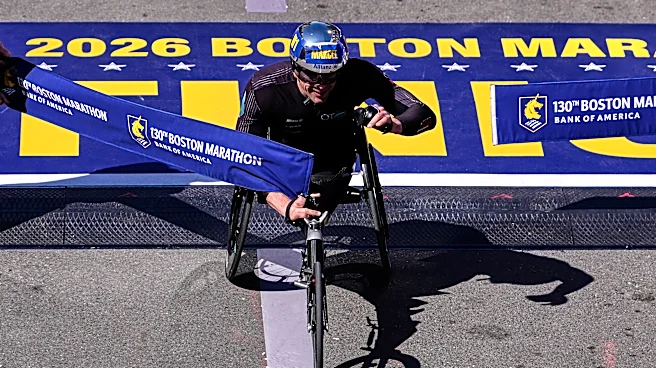
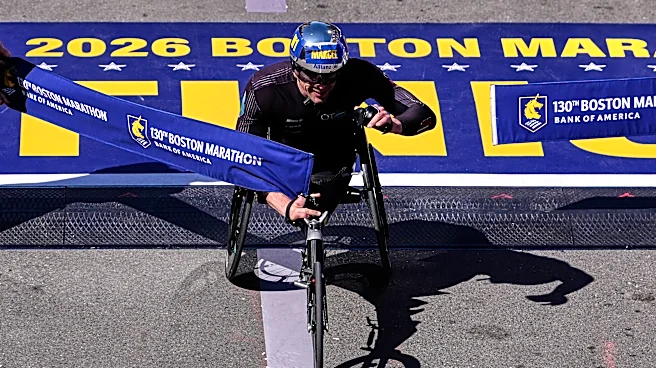
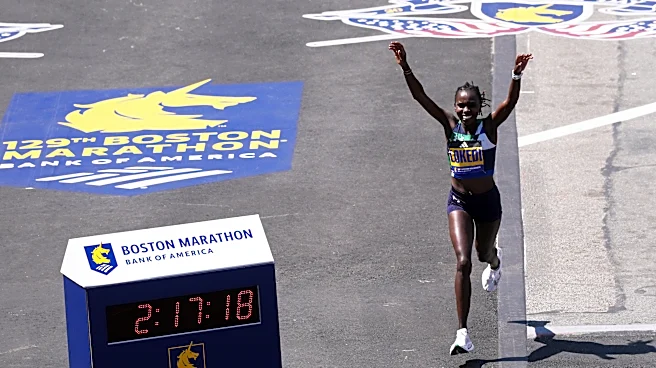
including clear skies and a slight tailwind, which contributed to the fastest field in the marathon's history. Sharon Lokedi, also from Kenya, secured her second consecutive win in the women's race with a time of 2:18:51. Both athletes received $150,000 and a gilded olive wreath from Marathon, Greece. In the wheelchair division, Marcel Hug of Switzerland won his ninth title, while Eden Rainbow-Cooper of Britain claimed her second victory in the women's wheelchair race.
Why It's Important?
The Boston Marathon is one of the most prestigious annual marathons globally, and breaking its course record is a significant achievement in the world of athletics. John Korir's record-setting performance not only highlights his personal athletic prowess but also underscores the competitive nature of the event, attracting top international talent. The victories of Korir and Lokedi continue to emphasize the dominance of Kenyan runners in long-distance events. Additionally, the marathon serves as a major cultural and economic event for Boston, drawing thousands of participants and spectators, which boosts local businesses and tourism.
What's Next?
Following the record-breaking performances, the Boston Marathon is likely to continue attracting elite athletes aiming to challenge the new benchmarks set by Korir and Lokedi. The event organizers may also look into further enhancing the race experience for participants and spectators, possibly by incorporating more technological advancements for race management and safety. The success of the marathon could inspire other cities to host similar large-scale sporting events, contributing to the growth of athletics globally.
Beyond the Headlines
The Boston Marathon's history and tradition play a significant role in its prestige. The event not only celebrates athletic excellence but also serves as a platform for social and cultural expression. This year, the introduction of a statue honoring marathon pioneer Bobbi Gibb highlights the ongoing efforts to recognize and celebrate the contributions of women in sports. The marathon's ability to adapt and innovate, such as employing crowd scientists to manage participant flow, reflects its commitment to maintaining its status as a leading global sporting event.