



What's Happening?
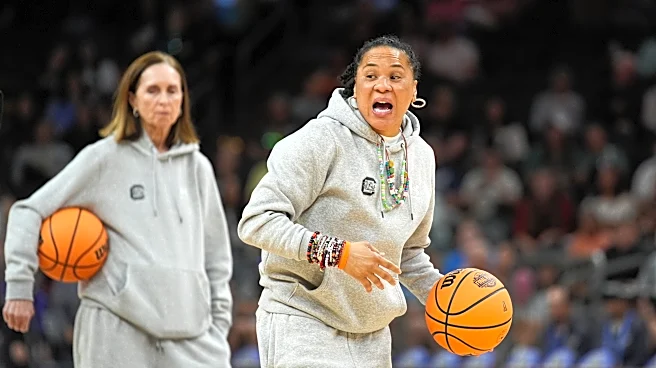
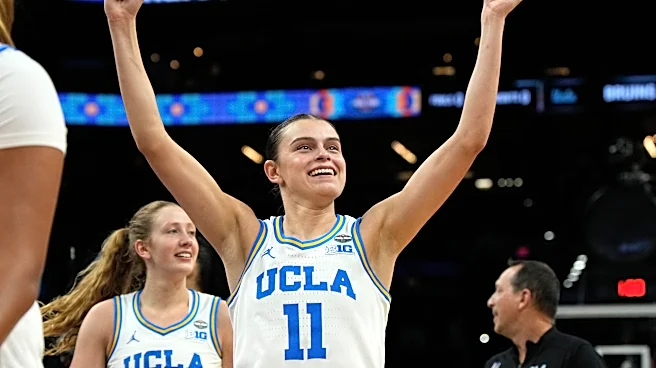
In the lead-up to the NCAA Women's National Championship game, South Carolina's head coach Dawn Staley and UCLA's head coach Cori Close shared a pregame embrace, addressing recent handshake protocol controversies. This follows an incident during the Final
Four where UConn's coach Geno Auriemma criticized Staley for not adhering to the traditional pregame handshake at halfcourt. The incident gained significant attention on social media, highlighting tensions between prominent figures in women's college basketball. Before the championship game, Staley and Close exchanged pleasantries and shook hands, with Staley notably smirking to the crowd, seemingly acknowledging the previous drama. The NCAA's operations manual typically requires coaches to meet at midcourt for a handshake after starting lineups are announced, a protocol that was not followed in the earlier game between South Carolina and UConn.
Why It's Important?
The handshake controversy underscores the intense scrutiny and high stakes involved in women's college basketball, particularly during the NCAA tournament. Such incidents can overshadow the athletic achievements and strategic prowess of the teams involved. The public and media focus on these interactions highlights the personalities and rivalries that drive interest in the sport. For the coaches and players, maintaining focus amidst such distractions is crucial, as it can impact team morale and performance. The incident also reflects broader themes of sportsmanship and the expectations placed on high-profile figures in sports, influencing how future interactions and protocols might be perceived and enforced.
What's Next?
As the championship game proceeds, attention will likely shift back to the on-court performances and the outcome of the tournament. However, the handshake incident may prompt the NCAA to review and possibly reinforce its pregame protocol guidelines to prevent similar controversies in the future. Coaches and teams might also become more conscious of their public interactions, knowing the potential for media scrutiny. The resolution of this incident could set a precedent for how such matters are handled in subsequent tournaments, influencing the culture and expectations within women's college basketball.