



What's Happening?
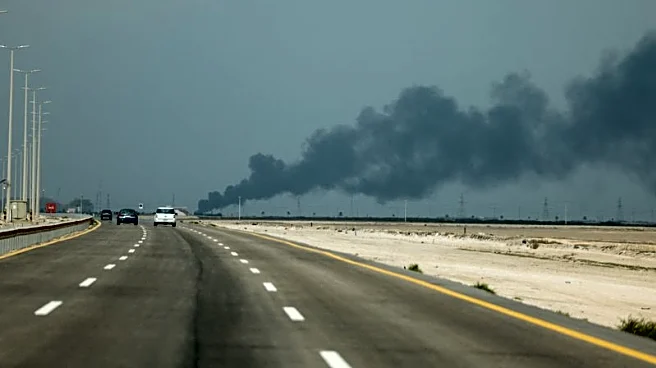
The MSCI research team has identified that emerging Asian markets are particularly vulnerable to the ongoing conflict in Iran, which has disrupted oil supplies through the Strait of Hormuz. Countries like China, South Korea, India, and Taiwan, which heavily
depend on oil transiting through the strait, have seen their equity markets significantly impacted. The MSCI Emerging Markets Index, which includes these countries, reflects the heightened risk and exposure to geopolitical shocks. The research emphasizes the importance of understanding the hidden linkages in investment portfolios, such as revenue generation from affected regions and supply chain vulnerabilities.
Why It's Important?
The findings by MSCI highlight the interconnectedness of global markets and the potential for geopolitical events to impact investment portfolios. Investors with exposure to emerging markets need to be aware of the risks associated with geopolitical tensions, particularly in regions critical to global energy supplies. The disruption in oil supplies can lead to increased volatility in equity markets, affecting investor confidence and economic stability. This situation underscores the need for diversified investment strategies that account for geopolitical risks.
What's Next?
Investors may need to reassess their portfolios to mitigate risks associated with geopolitical tensions. This could involve diversifying investments across regions and sectors less affected by the conflict. Additionally, there may be increased interest in alternative energy investments as countries seek to reduce dependency on volatile regions. The ongoing situation could also prompt discussions on global energy security and the need for international cooperation to ensure stable energy supplies.