







What's Happening?
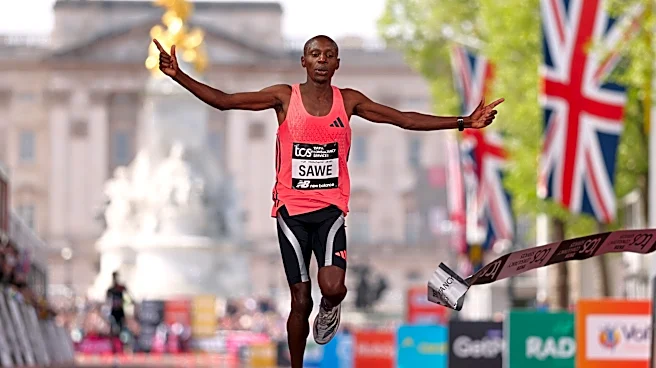
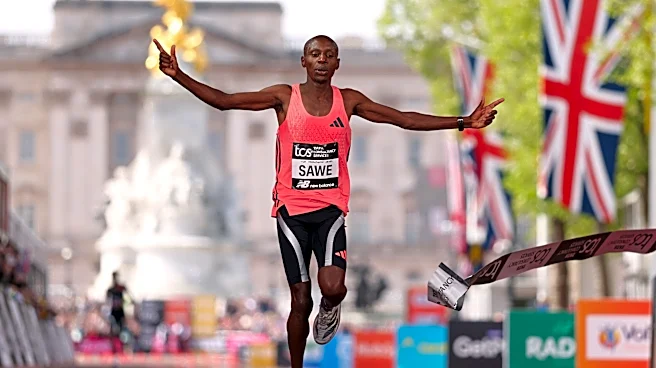
In a historic achievement, Sabastian Sawe of Kenya won the London Marathon, breaking the two-hour barrier with a time of 1 hour, 59 minutes, and 30 seconds. This remarkable feat shattered the previous men's world record by 65 seconds. Sawe's victory was
not solitary, as Ethiopia's Yomif Kejelcha also completed the marathon in under two hours, finishing just 11 seconds behind Sawe. The race was marked by Sawe's impressive pace, particularly in the second half, where he completed the final stretch in 59 minutes and 1 second. The event was celebrated by large crowds in London, who witnessed this unprecedented athletic achievement.
Why It's Important?
Breaking the two-hour marathon barrier is a significant milestone in the world of athletics, symbolizing the peak of human physical achievement. This accomplishment not only sets a new standard for marathon runners but also inspires athletes worldwide to push the boundaries of endurance sports. The achievement highlights advancements in training techniques and athletic performance, potentially influencing future marathon strategies and competitions. It also underscores the competitive spirit and talent of East African runners, who have dominated long-distance running for decades.
What's Next?
Following this groundbreaking achievement, the marathon community may see increased interest in breaking further records and exploring new training methodologies. Sponsors and athletic brands might invest more in developing advanced running gear and technology to support athletes in achieving such feats. Additionally, this event could lead to more competitive marathon events, with athletes aiming to surpass the new benchmark set by Sawe. The achievement may also prompt discussions on the evolution of marathon running and its future trajectory.