








What's Happening?
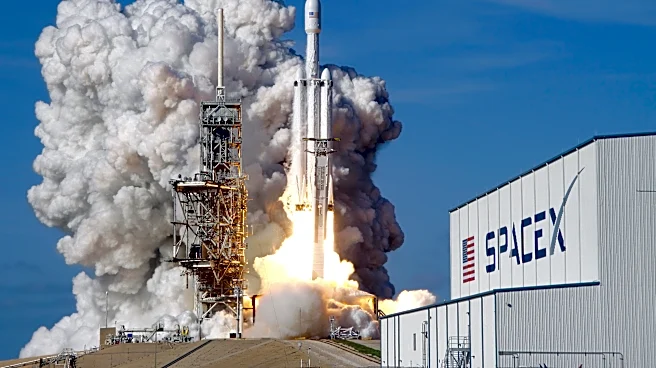
SpaceX, the aerospace company founded by Elon Musk, is set to make its debut on Wall Street with an initial public offering (IPO) expected to raise approximately $75 billion. The company plans to sell 555.6 million shares at $135 each. This IPO is anticipated
to be one of the largest in history, providing SpaceX with the capital needed to expand its Starlink satellite network and develop AI data centers in space. Musk's future compensation is partly tied to SpaceX's goal of establishing a human colony on Mars. The IPO will subject SpaceX to increased scrutiny from shareholders and regulatory bodies, requiring regular financial disclosures.
Why It's Important?
SpaceX's IPO marks a significant milestone in the commercial space industry, potentially setting a precedent for other private aerospace companies considering public offerings. The capital raised will enable SpaceX to accelerate its ambitious projects, including the deployment of a vast network of Starlink satellites and the development of space-based AI data centers. This move could enhance SpaceX's competitive edge in the space exploration and satellite internet markets. Additionally, the IPO could influence investor interest in the aerospace sector, highlighting the growing importance of space technology in global communications and infrastructure.
What's Next?
Following the IPO, SpaceX will face the challenge of meeting shareholder expectations while pursuing its long-term goals. The company will need to balance the demands of public market scrutiny with its innovative projects. The success of the IPO could lead to SpaceX's inclusion in major stock indices, attracting further investment. However, the company must also navigate potential regulatory hurdles and maintain its technological leadership in a rapidly evolving industry.