





What's Happening?
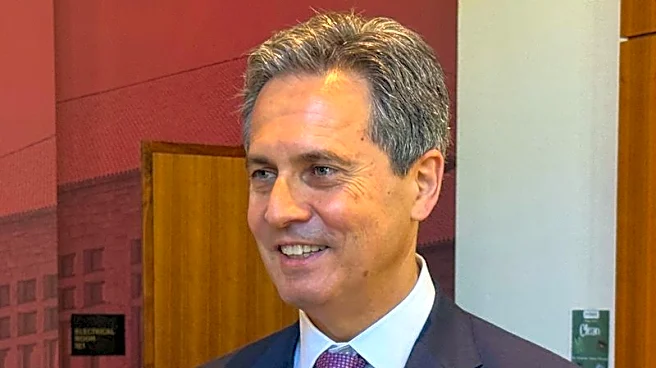
Federal Reserve Governor Michelle Bowman has cautioned against raising interest rates in response to the current spike in inflation, driven primarily by elevated energy prices. Speaking at a conference in Reykjavik, Iceland, Bowman argued that reacting
to temporary energy price inflation could impose unnecessary policy restraint, adversely affecting economic activity and labor market conditions. Despite inflation running above the central bank's 2% target, Bowman emphasized that policy adjustments should not be overly aggressive in response to temporary energy shocks. Her comments come as markets anticipate the Federal Reserve to maintain its current interest rate stance, with potential rate hikes not expected until early 2027.
Why It's Important?
Bowman's remarks highlight the Federal Reserve's cautious approach to managing inflation without stifling economic growth. Her stance reflects a broader debate within the central bank about how to address inflationary pressures without overreacting to temporary factors. The decision to hold off on rate hikes could support continued economic recovery and job growth, but it also risks allowing inflation to persist if energy prices remain high. The Federal Reserve's approach will have significant implications for financial markets, consumer spending, and business investment, as stakeholders look for stability and predictability in monetary policy.
What's Next?
The Federal Reserve's policy decisions in the coming months will be critical as it navigates the complex interplay of inflation, economic growth, and geopolitical tensions. Stakeholders will be closely monitoring the central bank's communications for any indications of a shift in policy. The duration and impact of the Middle East conflict on energy prices will be a key factor in determining the Federal Reserve's future actions. As the situation evolves, the central bank may need to reassess its strategy to ensure it meets its inflation targets while supporting economic stability.