
What's Happening?
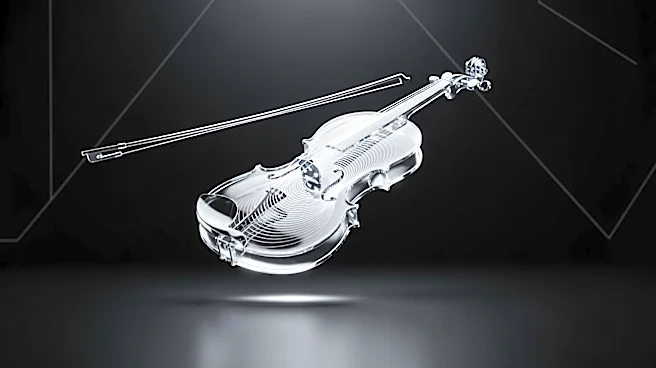
MIT engineers have introduced a new virtual violin, a computer simulation tool designed to assist luthiers in the intricate process of crafting violins. This tool captures the precise physics of the instrument
and can reproduce a realistic sound of a plucked string, as detailed in a paper published in the journal npj Acoustics. Unlike traditional software that simulates violin sounds through sampling, the MIT model is grounded in the fundamental physics of the instrument. The initiative aims to streamline the traditional hands-on experience luthiers rely on to shape an instrument's final sound. The research also delves into the historical context of violin acoustics, particularly the superior sounds of violins from the 'Golden Age,' including those by Antonio Stradivari.
Why It's Important?
The development of the virtual violin represents a significant advancement in the field of musical instrument design, potentially transforming how luthiers approach the crafting process. By providing a scientific basis for understanding violin acoustics, this tool could lead to innovations in violin design, enhancing the quality and consistency of new instruments. This could benefit both the music industry and musicians by making high-quality violins more accessible. Additionally, the tool may preserve traditional craftsmanship while integrating modern technology, offering a bridge between historical techniques and contemporary innovation.