





What's Happening?
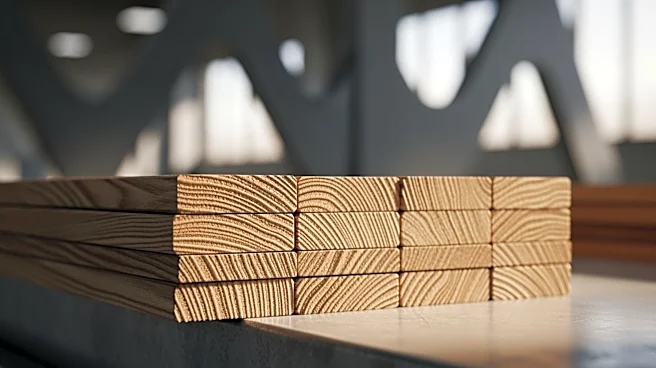
British Columbia's wood manufacturing sector has expressed frustration over the ongoing softwood lumber dispute with the United States, describing it as a 'broken process.' The Independent Wood Processors Association has criticized the current dispute-resolution
mechanisms under the Canada-United States-Mexico Agreement (CUSMA) for failing to produce meaningful progress. The U.S. Department of Commerce recently announced a preliminary tariff determination for the sector, estimated at just under 25%, which is lower than the current duty rate of over 35%. However, the association warns that there is still uncertainty about whether the finalized rate, expected in August, will actually reduce the current duty rate. Executive director Brian Menzies argues that the current mechanisms are ineffective and calls for political leaders to negotiate a real solution.
Why It's Important?
The ongoing dispute has significant implications for both Canadian and U.S. industries, as well as consumers. The tariffs and unresolved trade issues contribute to higher prices and uncertainty, affecting businesses and workers on both sides of the border. The call for direct negotiations highlights the need for a more effective resolution process that can provide stability and predictability for the lumber industry. The situation underscores the broader challenges in international trade relations and the impact of tariffs on cross-border economic activities.
What's Next?
The final tariff rate is expected to be announced in August, which will determine the immediate financial impact on the industry. In the meantime, there may be increased pressure on political leaders in both countries to engage in direct negotiations to resolve the dispute. The outcome of these negotiations could set a precedent for how similar trade disputes are handled in the future, potentially influencing trade policies and agreements beyond the lumber industry.