







What's Happening?
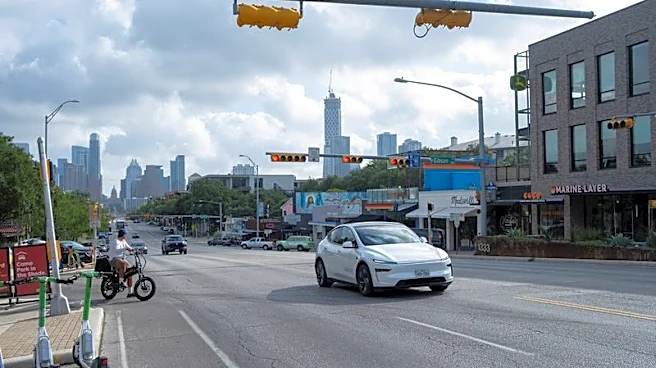
Amazon is broadening its 30-minute delivery service, known as Amazon Now, to include more U.S. cities. Initially piloted in Seattle and Philadelphia, the service will soon be available in Atlanta, Dallas-Fort Worth, and Austin, with plans to extend to Denver,
Houston, Minneapolis, Oklahoma City, and Orlando. The expansion aims to reach millions of customers by the end of the year. Amazon Now offers 30-minute delivery for a fee, with Prime members paying $3.99 per order and non-members $13.99. Additional fees apply for orders under $15. The service operates 24/7 in most areas, delivering groceries, household essentials, and in some locations, alcohol. Amazon utilizes a network of strategically placed smaller locations to facilitate efficient order fulfillment.
Why It's Important?
The expansion of Amazon's 30-minute delivery service represents a significant shift in consumer convenience and retail logistics. By offering rapid delivery, Amazon enhances its competitive edge in the e-commerce market, potentially increasing customer loyalty and attracting new users. This service could disrupt traditional retail models, as consumers may prefer the convenience of quick delivery over in-store shopping. The move also highlights Amazon's commitment to leveraging technology and logistics to meet consumer demands, potentially setting new standards for delivery speed in the industry. Businesses and retailers may need to adapt to this change by enhancing their own delivery capabilities or risk losing market share.
What's Next?
As Amazon continues to roll out its 30-minute delivery service, other retailers may respond by improving their own delivery options to remain competitive. This could lead to a broader industry trend towards faster delivery times. Additionally, Amazon's expansion may prompt regulatory scrutiny regarding labor practices and the environmental impact of increased delivery traffic. Consumers can expect more cities to gain access to this service, and Amazon may further innovate its logistics network to support the growing demand. Stakeholders, including local businesses and delivery service providers, will likely monitor these developments closely.