










What's Happening?
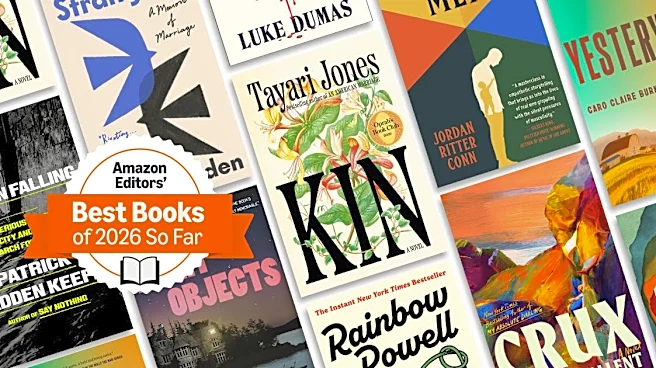
Maris Kreizman, a well-known literary critic and host of the podcast 'The Maris Review,' has released her list of the best books of 2026 so far. Despite challenges in the publishing industry, such as low wages for writers and corporate consolidation,
Kreizman highlights several standout works. Her selections include 'Night Night Fawn' by Jordy Rosenberg, a novel about a complex character on her deathbed, and 'Dog Days' by Emily Labarge, a memoir exploring trauma and narrative. Other notable mentions are 'On Toni Morrison' by Namwali Serpell, which offers an in-depth analysis of Morrison's work, and 'A Violent Masterpiece' by Jordan Harper, a Hollywood noir novel. Kreizman acknowledges the dominance of major publishers like Penguin Random House in her list and expresses a desire to diversify her reading by publisher in the future.
Why It's Important?
Kreizman's list underscores ongoing issues in the publishing industry, such as the financial struggles faced by writers and the impact of corporate consolidation on literary diversity. By highlighting these challenges, Kreizman draws attention to the need for more equitable practices within the industry. Her focus on diverse narratives and critical perspectives also emphasizes the importance of supporting a wide range of voices in literature. This can influence readers, publishers, and industry stakeholders to consider the broader implications of their choices and the value of diverse storytelling.
What's Next?
Kreizman's commitment to diversifying her reading list by publisher suggests a potential shift in focus for literary critics and readers alike. This could lead to increased support for independent publishers and a broader range of voices in the literary market. Additionally, the highlighted books may gain further attention and readership, potentially influencing future literary trends and discussions. As the year progresses, Kreizman's list may inspire other critics and readers to explore and promote underrepresented works.
Beyond the Headlines
The emphasis on diverse narratives and critical perspectives in Kreizman's list highlights a cultural shift towards valuing varied storytelling. This reflects broader societal movements advocating for inclusivity and representation across media. The recognition of works that challenge traditional narratives and explore complex themes may encourage more authors to tackle difficult subjects and push creative boundaries. This could lead to a richer, more varied literary landscape that better reflects the complexities of contemporary life.