





What's Happening?
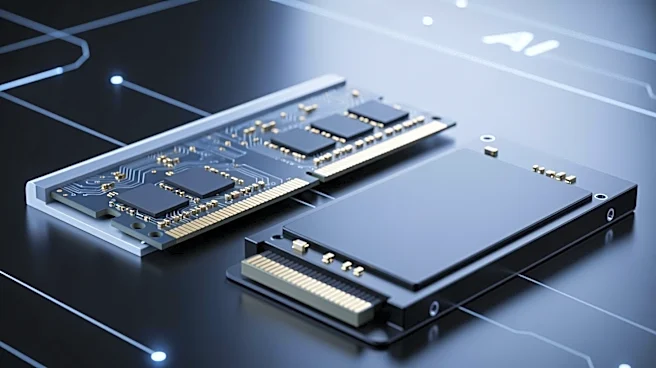
The CEO of Team Group, Gerry Chen, has issued a warning regarding the rising prices of DRAM and SSDs, driven by the increasing demand for AI servers. According to Chen, AI-related demand currently accounts for 40-50% of the total memory supply, and this
demand is expected to continue growing. The supply shortage is not limited to DRAM; NAND flash memory is also experiencing similar constraints, leading to a tight supply-demand situation across the market. Team Group, which purchases memory modules from major suppliers like SK hynix, Micron, and Samsung, is particularly vulnerable to these shortages. As a result, the company anticipates that the overall memory market will continue to face supply shortages until 2028. Chen also noted that while server product prices have already increased significantly, the general PC market remains relatively low, but this could change if server market prices continue to rise.
Why It's Important?
The rising prices of DRAM and SSDs have significant implications for both consumers and the tech industry. As AI servers drive up demand for memory components, the supply for general consumer products could become more limited, leading to higher prices for PCs and their components. This situation could impact consumers who are looking to upgrade their systems, as they may face higher costs or limited availability of necessary components. Additionally, the tech industry may need to adjust its strategies to cope with these supply constraints, potentially affecting production schedules and product launches. The ongoing supply shortages could also influence the competitive landscape, as companies that can secure a steady supply of components may gain an advantage over those that cannot.
What's Next?
If the current trends continue, consumers and businesses may need to brace for further price increases in memory components. Companies like Team Group may need to explore alternative supply chain strategies to mitigate the impact of these shortages. Additionally, the tech industry may see increased investment in memory production capabilities to address the growing demand. Policymakers and industry leaders might also consider collaborative efforts to stabilize the supply chain and ensure a more balanced distribution of resources between AI servers and consumer products. As the situation evolves, stakeholders will need to monitor market dynamics closely and adapt their strategies accordingly.