





What's Happening?
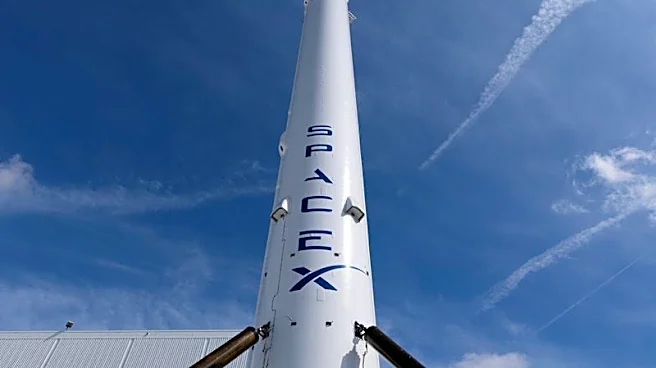
Traders are increasingly confident that Elon Musk will become the world's first trillionaire before 2027, driven by the anticipated success of SpaceX's upcoming initial public offering (IPO). The odds of Musk reaching this financial milestone have risen
significantly since last fall, following his net worth surpassing $500 billion in October and reaching over $700 billion in December. This increase was partly due to the Delaware Supreme Court's decision to restore Tesla stock options previously invalidated by a lower court. Musk has denied reports suggesting a lowered valuation for SpaceX, maintaining that the company will have a record-breaking IPO. Analysts also speculate about a potential merger between SpaceX and Tesla, which could further consolidate Musk's control over the AI ecosystem.
Why It's Important?
The potential for Elon Musk to become the first trillionaire underscores the significant impact of SpaceX's IPO on the financial markets and the tech industry. A successful IPO could set a new benchmark for future public offerings, influencing investor behavior and market dynamics. Musk's financial ascent highlights the growing influence of tech entrepreneurs in shaping global economic trends. The possibility of a SpaceX-Tesla merger could also have far-reaching implications, potentially creating a powerhouse in the AI and space exploration sectors. This development could lead to increased innovation and competition, affecting stakeholders across various industries.
What's Next?
As SpaceX prepares for its IPO, the financial community will closely monitor the company's performance and its impact on Musk's net worth. The IPO is expected to debut on Nasdaq early next month, and its success could further solidify Musk's position as a leading figure in the tech industry. Additionally, the potential merger between SpaceX and Tesla could be a significant development to watch, as it may reshape the landscape of the AI and space sectors. Stakeholders, including investors, competitors, and policymakers, will likely assess the implications of these moves on market competition and regulatory frameworks.