




What's Happening?
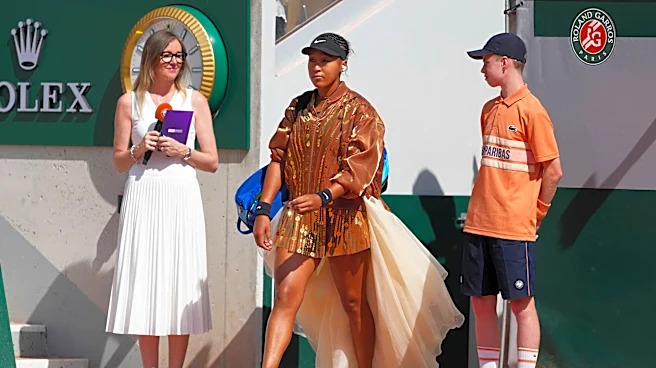
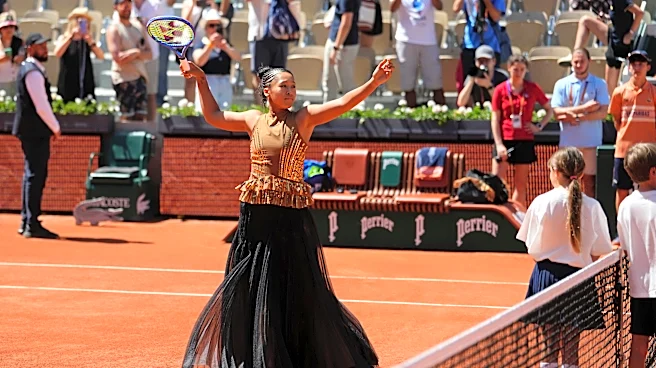
Naomi Osaka, a prominent tennis player, has been making headlines at the French Open not only for her performance but also for her bold fashion choices. During her second-round match, Osaka wore a metallic gold bomber jacket over a sequined gold dress,
complemented by an ivory train. This ensemble was part of her strategy to blend sportswear with couture, which she described as inspired by historical fashion styles. Osaka's fashion statements have sparked discussions among her peers, with some, like Laura Siegemund, expressing concerns about the time taken for such elaborate walk-ons. Siegemund criticized the practice, suggesting it highlights a disparity in how big names are treated compared to lesser-known players. Despite the criticism, Osaka continues to enjoy her role as an entertainer during Grand Slam events, emphasizing the fun and community built around her on-court outfits.
Why It's Important?
Osaka's fashion choices at the French Open highlight the intersection of sports and entertainment, raising questions about the role of athletes as entertainers. This development underscores a broader trend where sports figures are increasingly seen as cultural icons, influencing fashion and lifestyle beyond their athletic achievements. The debate also touches on issues of equity in sports, as some players feel that high-profile athletes receive preferential treatment. This could impact how tennis tournaments manage player appearances and the balance between sport and spectacle. For Osaka, her fashion statements are a way to engage with fans and express her personality, potentially setting a precedent for other athletes to follow suit.
What's Next?
As the French Open progresses, it remains to be seen how Osaka's fashion choices will continue to influence the tournament's atmosphere and player dynamics. The reactions from other players and officials could lead to discussions about the rules governing player attire and walk-on procedures. Additionally, Osaka's approach may inspire other athletes to explore similar expressions of individuality, potentially leading to a shift in how sports events are perceived and marketed. The ongoing conversation around her fashion could also prompt tennis organizations to consider how they balance tradition with modernity in the sport.