



What's Happening?
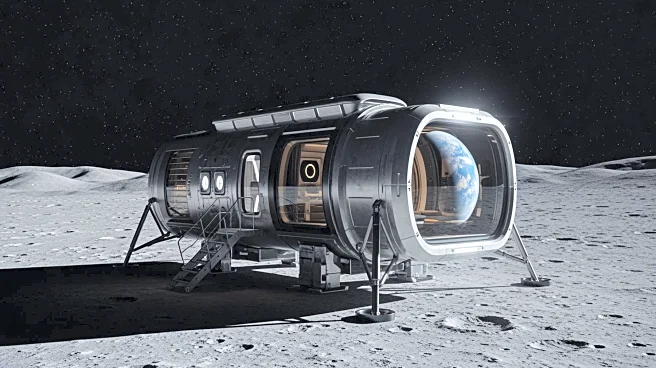
A Silicon Valley-based space startup, GRU Space, has initiated the reservation process for what it claims to be the first hotel on the Moon. The company is targeting ultra-wealthy travelers with a stay that could exceed $10 million. The lunar hotel, an inflatable structure, is designed to accommodate up to four guests at a time and will be delivered to the Moon by a heavy lander. The hotel will offer unique activities such as guided moonwalks, rover driving, and low-gravity golf. Reservations opened in January, requiring a non-refundable $1,000 application fee and a refundable deposit ranging from $250,000 to $1,000,000. The final pricing is yet to be determined, but it is expected to surpass $10 million, excluding transportation costs to the Moon.
Why It's Important?
This development marks a significant step in the commercialization of space travel and the potential establishment of a lunar economy. By targeting affluent individuals, GRU Space is positioning itself at the forefront of luxury space tourism. The project could pave the way for future space-based hospitality ventures and stimulate interest in lunar exploration. It also highlights the growing interest in utilizing space resources, as the hotel is part of a broader plan to use lunar soil for construction. This initiative could have implications for industries related to space travel, technology, and luxury tourism, potentially leading to new business opportunities and technological advancements.
What's Next?
GRU Space plans to expand the initial hotel module into a larger complex capable of hosting up to 10 guests. This expansion could serve as a precursor to similar projects on Mars. The company is also exploring partnerships with launch providers like SpaceX or Blue Origin for transportation services. As the project progresses, it will be crucial to monitor the technological and logistical challenges involved in establishing a sustainable presence on the Moon. The success of this venture could influence future policies and investments in space exploration and tourism.
Beyond the Headlines
The ethical and environmental implications of space tourism are significant. The project raises questions about the sustainability of such ventures and the potential impact on the lunar environment. Additionally, the high cost of participation highlights issues of accessibility and equity in space exploration. As the industry grows, there will be a need for regulations to ensure responsible and sustainable practices. The project also underscores the cultural fascination with space and the human desire to explore beyond Earth, which could inspire future generations of scientists and explorers.