





What's Happening?
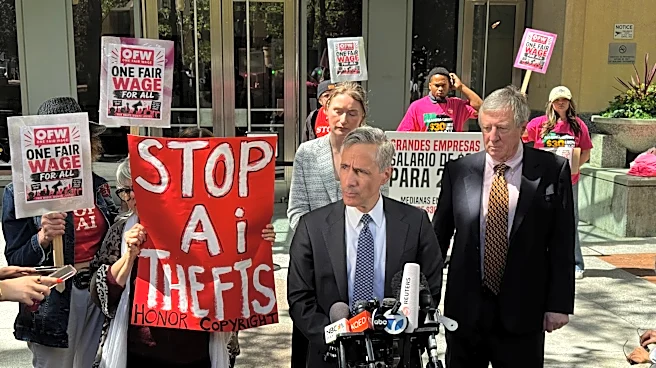
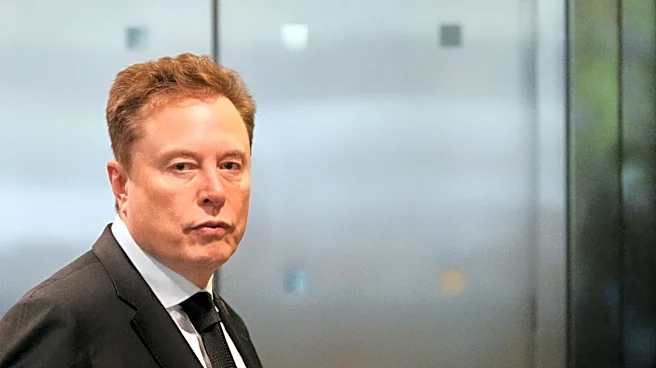
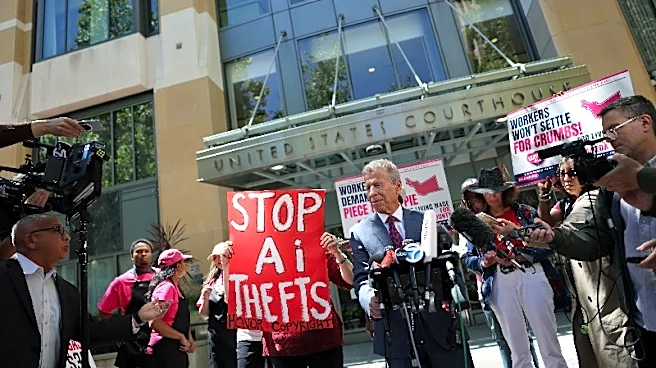
A federal jury has ruled in favor of OpenAI, dismissing Elon Musk's lawsuit that accused the company and its executives of betraying a shared vision for AI development. Musk, a co-founder of OpenAI, claimed that CEO Sam Altman and President Greg Brockman
shifted the organization from a nonprofit to a for-profit model without his consent. The jury found that Musk's lawsuit was filed too late, missing the statute of limitations. The trial, which began in April, highlighted the internal conflicts and strategic decisions that have shaped OpenAI's evolution into a major player in the AI industry, now valued at $852 billion.
Why It's Important?
The jury's decision is a significant victory for OpenAI, allowing it to continue its operations without the threat of legal disruption from Musk's claims. This outcome reinforces the company's strategic shift towards a for-profit model, which has enabled it to attract substantial investments and pursue ambitious AI projects. The case also underscores the complexities and challenges of managing transitions in organizational structures, especially in rapidly evolving fields like AI. For Musk, the ruling represents a setback in his efforts to influence the direction of AI development, highlighting the competitive dynamics between major tech leaders and companies.
What's Next?
Following the jury's decision, Musk has indicated plans to appeal the ruling, arguing that the case was dismissed on a technicality rather than its merits. This suggests that the legal battle may continue, potentially impacting OpenAI's public perception and strategic decisions. Meanwhile, OpenAI is likely to focus on its growth and innovation strategies, leveraging its current momentum to solidify its position in the AI industry. The case may also prompt other tech companies to reassess their governance structures and stakeholder agreements to prevent similar disputes.