






What's Happening?
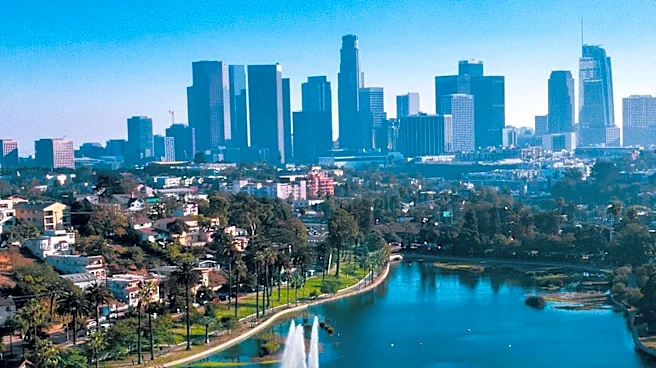
A new 13.5-mile urban hiking route has been developed in Northeast Los Angeles, connecting several parks and neighborhoods. The route, named 'River to the Hilltops,' was created using CalTopo mapping software and aims to provide a unique urban hiking experience.
The trail links parks such as Ernest E. Debs Park and Elephant Hill Open Space, offering panoramic views of downtown L.A. and the San Gabriel Mountains. The hike encourages exploration of local open spaces, which have been preserved and restored by community volunteers. The route is designed to be flexible, allowing hikers to start and stop at various points, and emphasizes respect for local residents by discouraging disruptive behavior.
Why It's Important?
This urban hiking initiative highlights the importance of preserving and utilizing open spaces within city environments. It offers residents and visitors a chance to engage with nature without leaving the urban setting, promoting physical activity and mental well-being. The development of such trails can foster community involvement in environmental conservation efforts, as seen with the volunteer work in maintaining these parks. Additionally, it underscores the potential for urban areas to offer recreational opportunities that are typically associated with more rural settings, thus enhancing the quality of life in densely populated regions.
What's Next?
The route is set to open officially, with ongoing efforts to improve trail conditions and accessibility. Community groups and environmental organizations may continue to advocate for the expansion and protection of urban open spaces. As the trail gains popularity, it could inspire similar projects in other urban areas, encouraging cities to integrate natural landscapes into their planning. The success of this initiative may also lead to increased funding and support for urban conservation projects.
Beyond the Headlines
The creation of urban hiking trails like 'River to the Hilltops' can have broader implications for urban planning and development. It challenges traditional notions of city landscapes by integrating natural elements into urban environments. This approach can lead to a shift in how cities are designed, prioritizing green spaces and sustainable practices. Furthermore, it can influence cultural attitudes towards urban living, promoting a lifestyle that values outdoor activities and environmental stewardship.