
What's Happening?
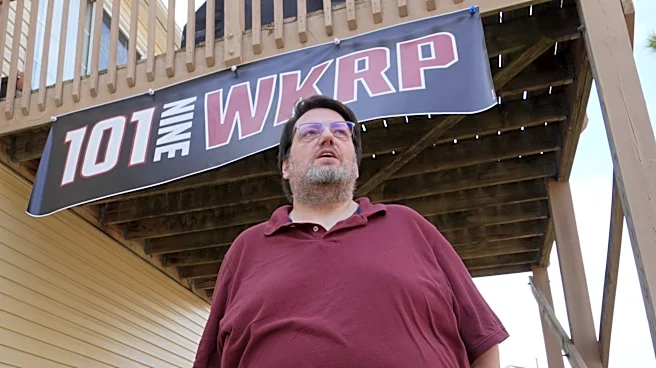
The iconic call sign WKRP, made famous by the CBS television sitcom 'WKRP in Cincinnati' that aired from 1978 to 1982, is set to make a real-life return to Cincinnati. D.P. McIntire, who runs a media nonprofit
in North Carolina, announced that the call letters will be used in Cincinnati, although he did not disclose specific details about the timing or the parties involved due to contractual obligations. The sitcom, which starred actors like Loni Anderson and Richard Sanders, became a cultural touchstone with its humorous portrayal of a struggling radio station. McIntire's nonprofit acquired the WKRP call sign from the Federal Communications Commission in 2014 and has been using it for a low-power FM station in Raleigh, North Carolina. The station, known for its nostalgic programming, is now transitioning leadership to younger members who are less interested in radio, prompting the auction of the call letters.
Why It's Important?
The return of the WKRP call sign to Cincinnati is significant as it revives a beloved piece of television history, potentially attracting attention and nostalgia from fans of the original show. This move could also impact the local media landscape in Cincinnati by introducing a station with a unique cultural legacy. For McIntire's nonprofit, the sale of the call letters represents a strategic shift towards supporting new broadcasters through a new venture, Independent Broadcast Consultants. This transition highlights the challenges faced by traditional radio in adapting to changing media consumption habits, as younger generations show less interest in radio. The use of the WKRP call sign in Cincinnati could serve as a case study in leveraging nostalgia to engage audiences in a modern media environment.
What's Next?
While specific details about the new WKRP station in Cincinnati remain undisclosed, the transition is expected to involve radio broadcasting. The proceeds from the sale of the call letters will support the establishment of Independent Broadcast Consultants, aimed at assisting new broadcasters. This initiative could foster innovation and sustainability in the radio industry by providing guidance and resources to emerging media entities. As the transition unfolds, stakeholders in the Cincinnati media market and fans of the original sitcom will likely watch closely to see how the legacy of WKRP is honored and adapted for contemporary audiences.