





What's Happening?
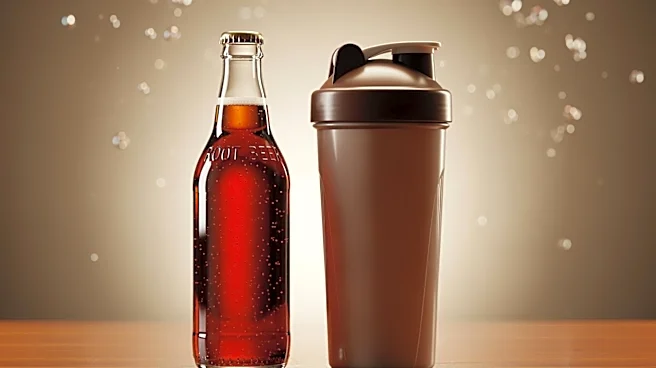
Mug Root Beer has introduced a new beverage called 'Brotein,' which combines Mug Zero Sugar Root Beer with a vanilla protein shake. This product is part of the growing 'proteinmaxx' trend, which encourages increased protein intake. The launch was announced
on April 21, 2026, and features George Kittle, a San Francisco 49ers tight end, as the face of the product. Kittle appears in a comedic commercial promoting the drink, highlighting its appeal to those who enjoy both protein shakes and root beer floats. The 'Brotein' drink is available as part of a bundle that includes a branded duffle bag, shaker bottle, and tank top, purchasable online at Walmart.com and TikTok Shop. The individual ingredients are also available at Kroger, Albertsons, and online platforms like Walmart.com and Instacart.
Why It's Important?
The introduction of 'Brotein' by Mug Root Beer reflects the increasing consumer interest in protein-enriched products, a trend that has been gaining momentum across various food and beverage sectors. This trend aligns with recent dietary guidelines from U.S. Secretary of Health and Human Services Robert F. Kennedy Jr., which advocate for higher protein consumption. By tapping into this market, Mug Root Beer is positioning itself to attract health-conscious consumers and those influenced by social media trends. The product's launch could influence other beverage companies to explore similar innovations, potentially reshaping the landscape of the beverage industry by integrating health-focused ingredients into traditional products.
What's Next?
As 'Brotein' enters the market, consumer reception will likely determine its success and influence future product developments. If the product gains popularity, it could lead to an expansion of protein-infused beverages across other brands. Additionally, the success of 'Brotein' might encourage Mug Root Beer to explore further innovations in their product line, potentially introducing new flavors or variations. The broader impact on the beverage industry could include increased competition among brands to incorporate health-oriented ingredients, as well as collaborations with fitness and health influencers to promote such products.