








What's Happening?
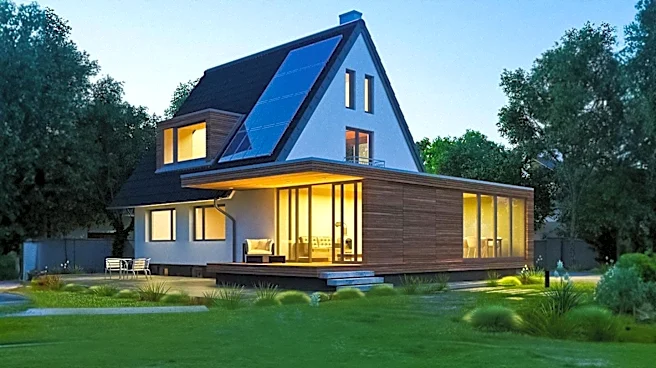
Johnsen Schmaling Architects, a Milwaukee-based firm, has designed a new residential project known as the Kettle Moraine House in Campbellsport, Wisconsin. The house is situated on over 50 acres of restored native prairie and is designed to blend seamlessly
with its natural surroundings. The architecture of the house is inspired by the glacial formations of the Kettle Moraine area, featuring a tripartite layout that divides the home into three parallel strips. This design not only defines the living spaces but also creates a courtyard and patio, allowing the house to integrate with the landscape without dominating it. The project is part of the firm's broader portfolio, which includes work across various U.S. states, emphasizing site-responsive design and sustainability.
Why It's Important?
The Kettle Moraine House exemplifies a growing trend in architecture that prioritizes environmental sustainability and site-specific design. By embedding the house into the landscape and using materials and design strategies that minimize visual and environmental impact, Johnsen Schmaling Architects is contributing to a shift towards more sustainable residential architecture. This approach not only preserves the natural beauty of the site but also enhances the living experience by creating a strong connection between the indoor and outdoor environments. The project also highlights the firm's commitment to sustainability, as seen in features like a heat recovery ventilation system and rain gardens for stormwater management. Such projects can influence future residential designs, encouraging architects to consider environmental impact and sustainability as integral components of their work.
What's Next?
Johnsen Schmaling Architects plans to continue expanding its portfolio with projects across the United States, including in Utah, Virginia, Michigan, Pennsylvania, and California. Each project offers an opportunity to adapt their design approach to different environmental conditions and local building cultures. As these projects move from design to construction, the firm aims to deepen its technical expertise and refine strategies related to material performance and sustainability. This ongoing work will likely further establish the firm as a leader in site-driven, sustainable architecture, potentially influencing industry standards and practices.