



What's Happening?
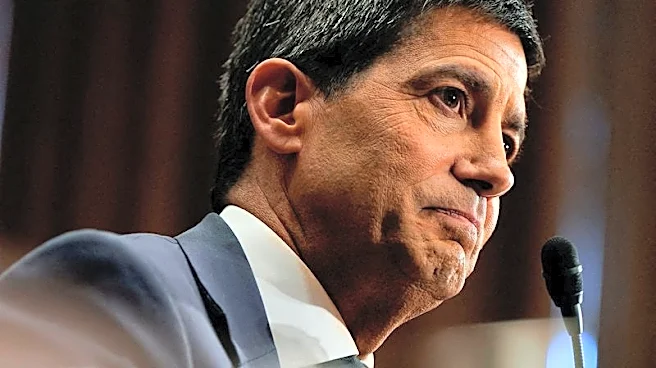
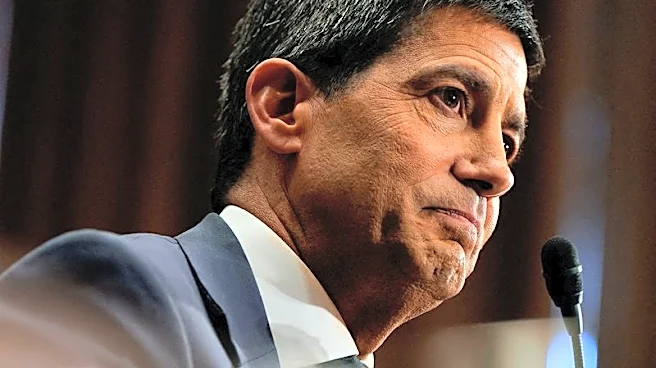
Kevin Warsh has been officially sworn in as the chairman of the Federal Reserve, with Supreme Court Justice Clarence Thomas administering the oath during a ceremony at the White House. This marks the first time since Alan Greenspan in 1987 that a Fed Chair
has been sworn in at the White House. Warsh, who was confirmed by the Senate with a 54-45 vote, takes over at a time of significant economic challenges, including rising inflation and global economic pressures due to the ongoing war in Iran. President Trump, who nominated Warsh, emphasized the importance of Fed independence during the ceremony. Warsh has indicated a reform-oriented approach to his leadership, suggesting potential foundational changes at the Federal Reserve.
Why It's Important?
The appointment of Kevin Warsh as Fed Chair comes at a critical juncture for the U.S. economy, which is grappling with inflationary pressures exacerbated by global events such as the war in Iran. The rise in oil prices has contributed to inflation, complicating the Federal Reserve's task of maintaining price stability. Warsh's leadership will be pivotal in navigating these challenges, particularly as the Fed considers potential interest rate hikes to curb inflation. His approach to reforming the Fed could have long-term implications for monetary policy and economic stability. Stakeholders, including businesses and consumers, are closely watching how Warsh will balance the need for economic growth with inflation control.
What's Next?
As Warsh begins his tenure, the Federal Reserve will need to address the persistent inflation that has remained above its 2% target for over five years. The recent surge in wholesale and consumer prices, driven by higher energy costs, underscores the urgency of the situation. Warsh's decisions on interest rates will be closely scrutinized, especially given the pressure from the White House for lower rates. The Fed's upcoming meetings will likely focus on assessing the inflation data and determining the appropriate monetary policy response. Warsh's reform-oriented agenda may also lead to structural changes within the Fed, impacting its future policy direction.