





What's Happening?
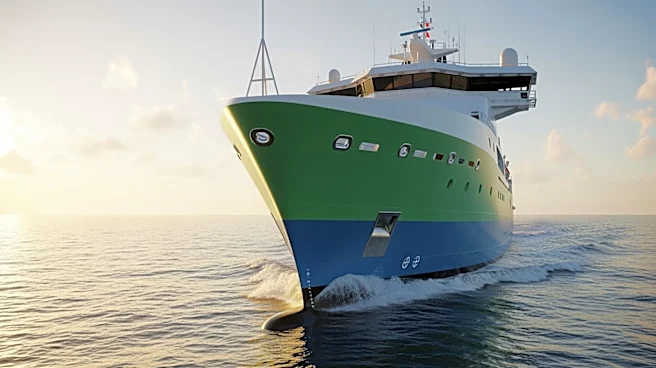
Brazilian mining giant Vale has entered into a 25-year charter agreement with China's Shandong Shipping Corporation for the construction of the world's first ethanol-powered ocean-going vessels. These Guaibamax-class bulk carriers, each with a capacity
of 325,000 tons of iron ore, are set to be delivered starting in 2029. The ships will feature rotary sails and advanced engines to improve energy efficiency and reduce emissions. This initiative is part of Vale's broader strategy to decarbonize its maritime transport operations and align with global trends towards sustainable energy solutions. The agreement comes amid geopolitical tensions affecting the oil market, prompting a shift towards alternative fuels in maritime logistics.
Why It's Important?
This development marks a significant step in the maritime industry's transition towards sustainable energy sources. By investing in ethanol-powered vessels, Vale is not only reducing its carbon footprint but also setting a precedent for other companies in the sector. The move could influence global shipping practices, encouraging the adoption of cleaner technologies. Additionally, it highlights the growing importance of flexible logistics systems that can adapt to geopolitical and market changes. For Vale, this strategy supports its commitment to sustainability and could enhance its competitive edge in the iron ore market by appealing to environmentally conscious stakeholders.
What's Next?
Vale's commitment to ethanol-powered vessels may prompt other companies to explore similar technologies, potentially accelerating the maritime industry's shift towards decarbonization. The success of these vessels could lead to further investments in alternative fuels and energy-efficient technologies. As the delivery of these ships is scheduled for 2029, the industry will be watching closely to assess their performance and impact. Additionally, Vale's exploration of retrofitting existing vessels to run on ethanol suggests a broader application of this technology, which could further reduce emissions across its fleet.