


What's Happening?
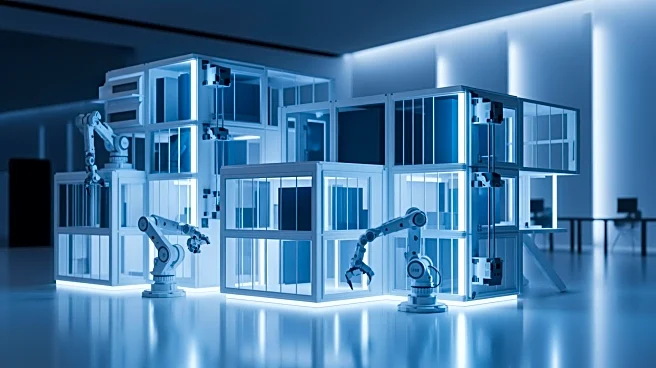
Neura Robotics, a company specializing in cognitive robotics and physical AI, has entered into a strategic partnership with Drees & Sommer, an international consulting firm focused on construction and infrastructure. The collaboration aims to design and operate buildings as interactive systems that integrate human and robotic interactions in real-time. Initially, the partnership will concentrate on automating sanitary facilities, addressing the high demand for hygiene and availability. This initiative reflects a shift towards adaptive architecture where buildings are designed to be more automated, efficient, and safe. The partnership envisions creating environments where robots are not just tools but intelligent companions that can autonomously
perform tasks such as cleaning and maintenance, particularly in areas with a shortage of skilled workers.
Why It's Important?
This partnership signifies a significant advancement in the integration of robotics within everyday infrastructure, potentially transforming how buildings are designed and operated. By focusing on automation in sanitary facilities, the collaboration addresses critical needs for hygiene and efficiency, especially in high-traffic areas. The development of 'smart buildings' that incorporate robotics could lead to increased safety, reduced workloads for humans, and more efficient use of resources. This could have far-reaching implications for industries such as healthcare, manufacturing, and office management, where the demand for automation and skilled labor is high. The initiative also highlights the growing trend of integrating digital and physical environments, paving the way for more intelligent and responsive infrastructure.
What's Next?
The partnership between Neura Robotics and Drees & Sommer is set to explore further applications of robotics in various sectors, including nursing, care facilities, production, and airports. As the collaboration progresses, it is expected to expand beyond sanitary facilities to other areas where automation can significantly impact efficiency and safety. The development of a 'digital nervous system' within buildings will allow for real-time data analysis and interaction between robots and their environments, potentially leading to more autonomous and adaptive infrastructure. Stakeholders in construction, technology, and facility management will likely monitor these developments closely, as they could redefine industry standards and practices.
Beyond the Headlines
The collaboration between Neura Robotics and Drees & Sommer could lead to ethical and cultural shifts in how society perceives and interacts with robots. As robots become more integrated into daily life, questions about privacy, data security, and the role of human workers in automated environments may arise. The partnership also underscores the importance of developing infrastructure that can adapt to technological advancements, ensuring that buildings remain relevant and functional in the face of rapid innovation. This initiative could serve as a model for future collaborations between technology and construction firms, highlighting the potential for cross-industry partnerships to drive innovation.