
What's Happening?
Connor Storrie, a breakout star from the show Heated Rivalry, hosted Saturday Night Live for the first time, where his opening monologue addressed a recent controversy involving the U.S. men's hockey team. During the monologue, Storrie was joined by Quinn
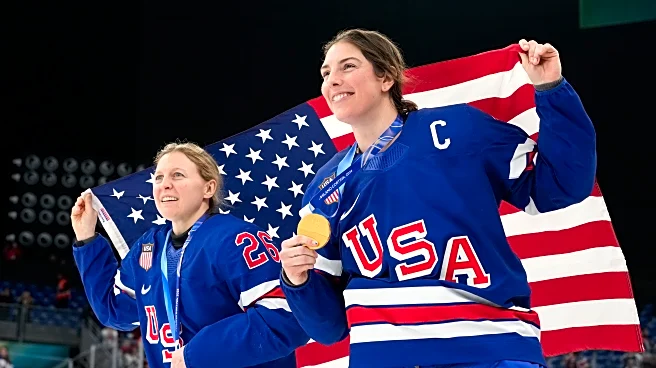
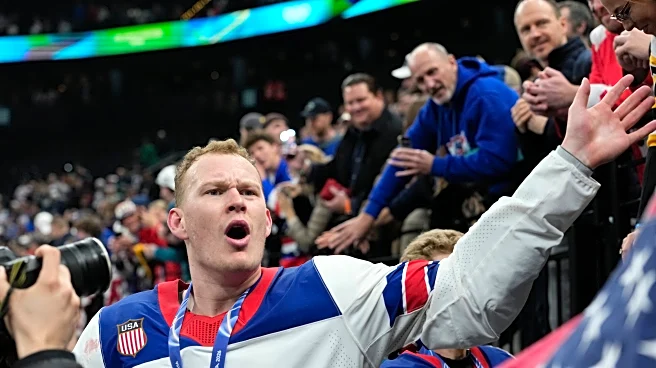
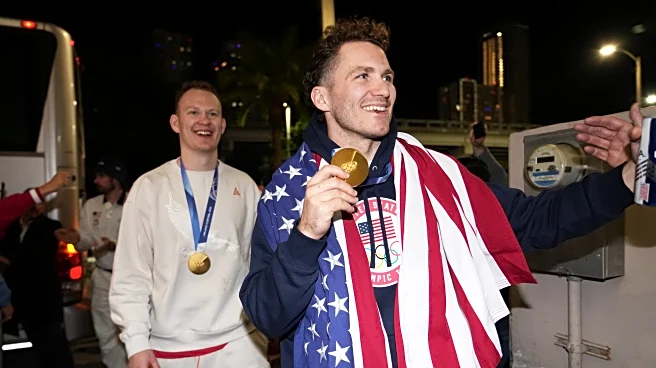
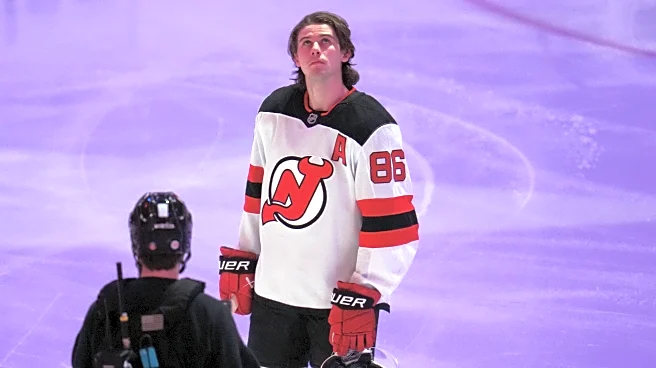
and Jack Hughes, members of the men's team that won Olympic gold in Milan. The segment humorously acknowledged the men's team's recent locker room video, which featured them laughing at a joke by President Trump about reluctantly inviting the women's team to the White House. The women's team, represented by Hilary Knight and Megan Keller, also won Olympic gold and received louder applause during the show. The monologue served as a platform for the men's team to address the backlash and express respect for the women's team.
Why It's Important?
The incident highlights ongoing issues of gender equality and respect in sports, particularly in how male athletes perceive and interact with their female counterparts. The men's team's initial response to the controversy, including their visit to the White House, drew criticism and underscored the importance of addressing misogyny in sports. The SNL monologue provided a public forum for the men's team to acknowledge their missteps and express solidarity with the women's team. This event emphasizes the need for continued dialogue and action to promote gender equality in sports and beyond, impacting public perception and potentially influencing future policies and practices within athletic organizations.
What's Next?
Following the SNL appearance, it is likely that both the men's and women's hockey teams will continue to engage in public discussions about gender equality in sports. The men's team may face further scrutiny and pressure to demonstrate genuine support for their female counterparts. Additionally, sports organizations and governing bodies might consider implementing more robust policies and training to address and prevent misogyny and promote inclusivity. The public and media will likely continue to monitor the teams' actions and statements, influencing the broader conversation about gender dynamics in sports.