
What's Happening?
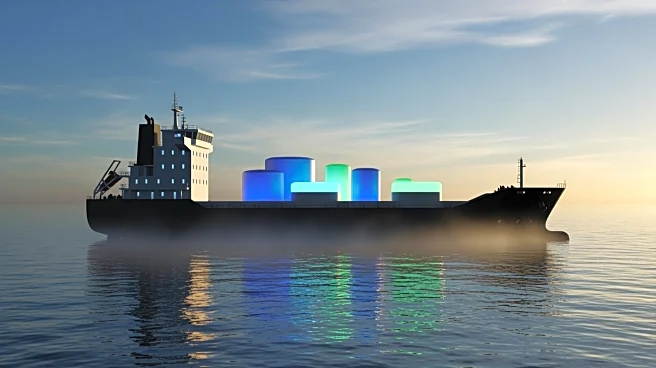
Capital Maritime Group has launched the first large capacity vessel designed to support carbon capture, transport, and storage, marking a significant development in the shipping industry. The vessel, with
a capacity of 22,000 cubic meters, is capable of transporting liquefied carbon dioxide (LCO2) and other gas cargos such as LPG, ammonia, and selected petrochemicals. This initiative is part of Capital's new operation, Capital Clean Energy Carriers, which aims to tap into the emerging market for carbon capture, utilization, and storage (CCUS). The vessel, named Active, was delivered on January 6 and will be deployed under a six-month charter for transporting LPG, with an option to extend the contract. The ship is registered in the Marshall Islands and was built by South Korea's Hyundai Mipo Dockyard.
Why It's Important?
The launch of this vessel represents a significant step forward in the carbon capture and storage industry, which is crucial for reducing global carbon emissions. According to the International Energy Agency, current carbon capture capacity is around 50 million tonnes per year, but it could increase to 430 million tonnes by 2030. The introduction of such vessels could facilitate this growth by providing the necessary infrastructure for transporting captured carbon. This development not only supports environmental goals but also opens new business opportunities in the shipping and energy sectors. Companies involved in CCUS stand to benefit from increased demand for carbon transport and storage solutions, potentially leading to economic growth and job creation in these industries.
What's Next?
Capital Maritime Group plans to expand its fleet with additional vessels to meet the growing demand for carbon transport. The company has nine LNG carriers, six dual-fuel medium gas carriers, and three handy LCO2/multi-gas carriers on order, expected to be delivered between 2026 and 2029. As the market for carbon capture and storage continues to develop, other shipping companies may also enter this space, increasing competition and innovation. Additionally, regulatory frameworks and international agreements on carbon emissions could further influence the growth and direction of this industry.