
What's Happening?
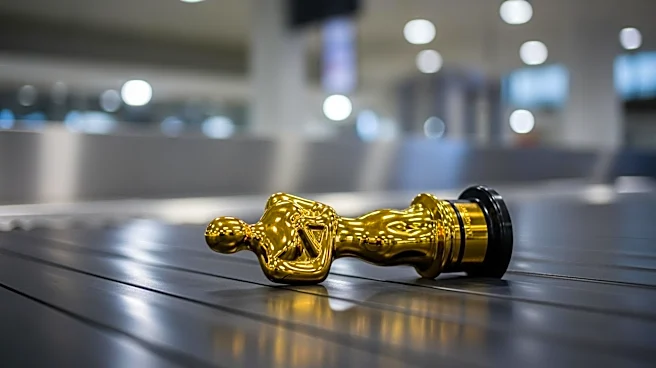
Pasha Talankin, co-director of the Oscar-winning documentary 'Mr. Nobody Against Putin,' faced an unexpected issue at JFK Airport in New York when TSA officials refused to allow him to board a flight with
his Oscar statuette. The TSA deemed the 8.5-pound award a potential weapon, despite Talankin having traveled with it multiple times without incident. A Lufthansa agent attempted to assist by suggesting the statuette be stored in the cockpit, but this was overruled. Ultimately, the Oscar was placed in a cardboard box provided by Lufthansa and checked in for the flight. Upon arrival in Frankfurt, the box was missing, prompting Lufthansa to initiate a search. Talankin, who has been living in exile due to his opposition to Russian educational mandates, expressed frustration over the incident.
Why It's Important?
This incident highlights potential inconsistencies in airport security protocols and raises questions about the treatment of high-profile individuals and their possessions. The loss of the Oscar not only affects Talankin personally but also underscores the challenges faced by individuals in exile who continue to face bureaucratic hurdles. The situation has drawn attention to the TSA's decision-making process and Lufthansa's handling of valuable items, potentially impacting public perception of these organizations. Additionally, it raises concerns about the protection of cultural and artistic achievements during international travel.
What's Next?
Lufthansa has committed to a thorough search for the missing Oscar and has expressed regret over the situation. If the statuette is not found, Talankin may need to request a replacement from the Motion Picture Academy, a process typically reserved for lost or severely damaged awards. The incident may prompt discussions within the TSA and airlines about handling valuable and symbolic items. Public and industry reactions could lead to policy reviews or changes in how such situations are managed in the future.
Beyond the Headlines
The incident also touches on broader themes of cultural diplomacy and the symbolic power of awards like the Oscars. Talankin's experience as an exiled filmmaker adds a layer of complexity, highlighting the intersection of art, politics, and personal safety. The situation may inspire discussions about the role of art in political discourse and the responsibilities of institutions in safeguarding cultural heritage.