





What's Happening?
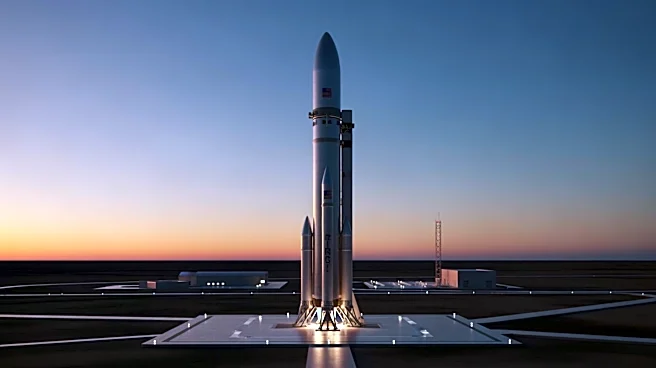
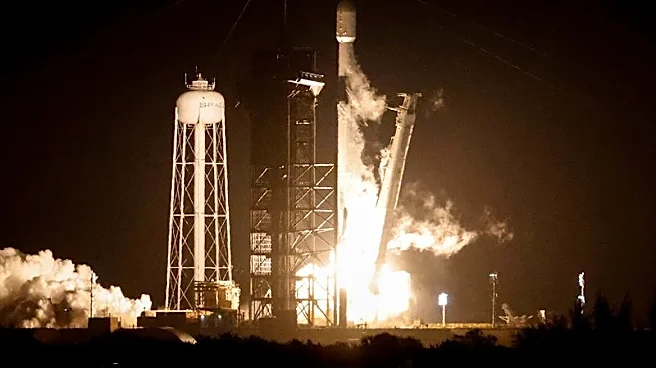
Blue Origin has conducted a significant static fire test of its New Glenn rocket at Cape Canaveral Space Force Station, marking a crucial step towards the rocket's first reflight. The test involved firing the rocket's seven first-stage engines while it remained
anchored to the launch pad. This development is part of the preparations for the NG-3 mission, scheduled for launch on April 19, which will reuse a booster from a previous flight. This mission will also deploy a Block 2 BlueBird satellite for AST SpaceMobile into low Earth orbit. The New Glenn rocket, which stands 322 feet tall, has previously launched twice, including a successful mission sending NASA's ESCAPADE probes to Mars. The upcoming launch will test new upgrades, including a thermal protection system on one of the engine nozzles.
Why It's Important?
The successful reflight of the New Glenn rocket represents a significant milestone for Blue Origin in the competitive space industry. Reusability is a key factor in reducing the cost of space travel, and Blue Origin's ability to refurbish and relaunch its rockets could enhance its competitiveness against other space companies like SpaceX. The deployment of the Block 2 BlueBird satellite also highlights the growing demand for satellite internet services, which are becoming increasingly important for global connectivity. This mission underscores Blue Origin's commitment to advancing space technology and its potential to play a pivotal role in future space exploration and commercial satellite deployment.
What's Next?
Following the NG-3 mission, Blue Origin plans to continue utilizing the engines from the NG-2 mission for future flights, indicating a strategy focused on maximizing the reusability of its rocket components. The company aims to have each New Glenn first stage fly at least 25 times, which could significantly lower operational costs and increase launch frequency. The success of this mission could lead to more frequent launches and potentially open new opportunities for partnerships with government and commercial entities seeking reliable and cost-effective access to space.