



What's Happening?
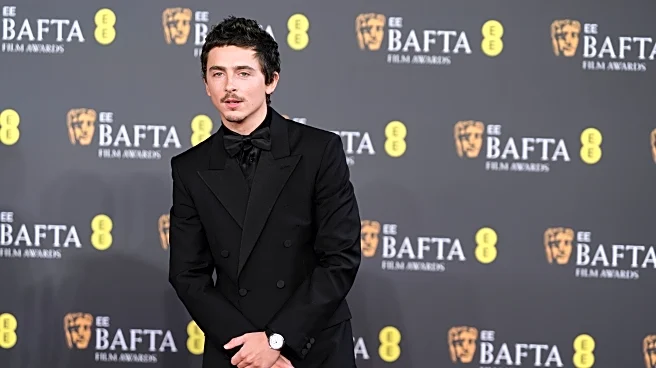
The 2026 BAFTA Awards, hosted by Alan Cumming, took place at London's Royal Festival Hall, where Robert Aramayo won the award for leading actor for his role in 'I Swear.' This unexpected win was announced by Kerry Washington, surprising many who anticipated Timothée Chalamet to take the prize. Aramayo, who also received the Rising Star award earlier in the evening, was recognized for his portrayal of John Davidson, a real-life Tourette's syndrome campaigner. The ceremony also saw 'One Battle After Another' and 'Sinners' as major winners, with Paul Thomas Anderson's film taking home the best film award. The event was marked by moments of surprise and emotion, including a notable speech by Aramayo, who expressed admiration for his fellow nominees,
particularly Ethan Hawke.
Why It's Important?
The BAFTA Awards are a significant event in the film industry, often seen as a precursor to the Oscars. Robert Aramayo's win highlights the recognition of diverse talent and stories, particularly those that bring awareness to conditions like Tourette's syndrome. The awards also reflect broader industry trends, with films like 'One Battle After Another' and 'Sinners' dominating the ceremony, indicating their strong positioning for upcoming awards. The event underscores the importance of storytelling in addressing social issues and the power of film to influence public perception and understanding.
What's Next?
Following the BAFTA Awards, attention will likely shift to the Oscars, where many of the same films and actors will compete. The recognition of 'I Swear' and Aramayo's performance may boost the film's visibility and impact as it prepares for its stateside release. Industry stakeholders will be watching closely to see if the trends and winners at the BAFTAs will be mirrored at the Oscars, potentially influencing future projects and investments in similar narratives.
Beyond the Headlines
The BAFTA Awards also highlighted the ongoing conversation about diversity and representation in the film industry. The presence of John Davidson, whose Tourette's syndrome was a focal point of the evening, brought attention to the challenges faced by individuals with disabilities. The ceremony's handling of Davidson's involuntary outbursts, and the subsequent apology, reflects the industry's efforts to balance inclusivity with audience sensitivities. This event may prompt further discussions on how award shows and the film industry can better accommodate and represent diverse voices and experiences.