



What's Happening?
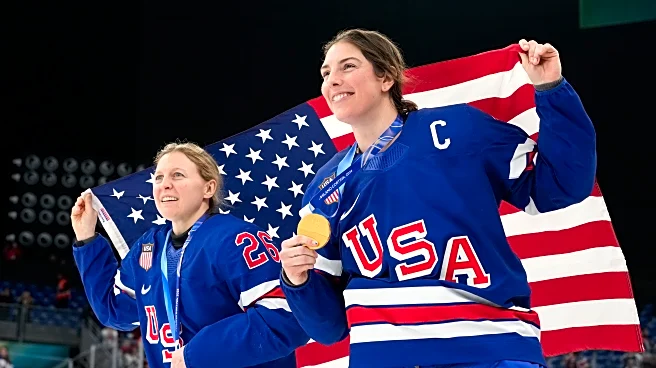
U.S. women's hockey captain Hilary Knight and teammate Megan Keller, alongside men's team members Jack and Quinn Hughes, made a surprise appearance on 'Saturday Night Live' during Connor Storrie's opening monologue. The appearance followed a week of controversy
involving a congratulatory call from President Trump to the men's team after their gold medal win against Canada. Trump invited the men's team to his State of the Union speech, joking that he would have to invite the women's team as well to avoid impeachment. Knight criticized the joke as distasteful, while the men's team members acknowledged they should have reacted differently. The women's team, who also won gold against Canada, declined Trump's invitation due to travel plans. The SNL appearance also highlighted the success of 'Heated Rivalry,' a show featuring a gay hockey romance, which is set to begin filming its second season.
Why It's Important?
The incident highlights ongoing discussions about gender equality in sports, particularly in how male and female athletes are recognized and celebrated. The differing travel arrangements and the nature of the invitation from President Trump underscore disparities in treatment between the men's and women's teams. The SNL appearance provided a platform for the athletes to address these issues humorously, potentially influencing public perception and sparking further dialogue on gender equity in sports. Additionally, the success of 'Heated Rivalry' reflects growing acceptance and representation of LGBTQ+ narratives in mainstream media, indicating a shift towards more inclusive storytelling.
What's Next?
The second season of 'Heated Rivalry' is set to begin filming in August, promising to continue its exploration of LGBTQ+ themes in sports. The ongoing conversation about gender equality in sports may lead to increased advocacy for equal treatment and recognition of female athletes. Stakeholders in sports and media may face pressure to address these disparities and promote more equitable practices. The public's response to these developments could influence future policies and cultural attitudes towards gender and representation in sports.