



What's Happening?
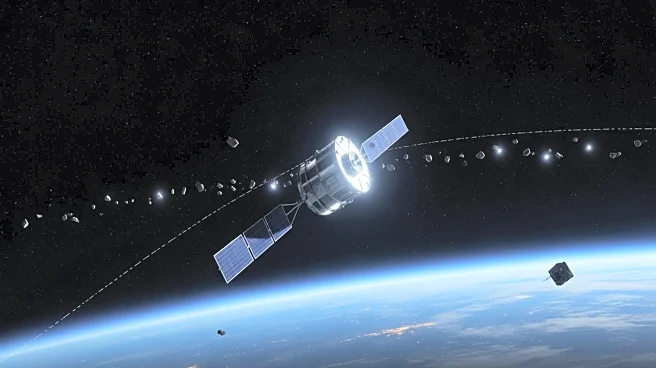
SpaceX has reported the loss of a Starlink satellite following an unexplained anomaly, marking the second such incident since December. The satellite, identified as Starlink 34343, was detected by space-tracking company Leo Labs, which noted the presence
of multiple objects in its vicinity post-event. SpaceX has assured that the incident poses no risk to the International Space Station, its crew, or NASA's upcoming Artemis II mission. The company is currently investigating the root cause of the anomaly. The satellite and its debris are expected to disintegrate in the Earth's atmosphere within weeks. This incident highlights the growing congestion in low Earth orbit, where over 24,000 objects, including debris and approximately 10,000 Starlink satellites, are being monitored.
Why It's Important?
The repeated incidents involving Starlink satellites underscore the challenges of managing space traffic in low Earth orbit, a region increasingly crowded with satellites and debris. This congestion poses potential risks to existing space infrastructure, including the International Space Station and future missions. The situation also raises questions about the sustainability of large satellite constellations like Starlink, which aims to deploy up to one million satellites. The implications for space safety and the regulatory environment are significant, as stakeholders must address the risks of collisions and debris generation. The incidents may prompt regulatory bodies like the FCC to reassess guidelines for satellite deployment and collision avoidance strategies.
What's Next?
SpaceX is actively investigating the cause of the latest satellite anomaly and will continue to monitor the situation in collaboration with NASA and the U.S. Space Force. The company is also pursuing FCC approval for a massive expansion of its satellite network, which could further complicate the regulatory landscape. As SpaceX prepares for a potential IPO, the company’s ability to manage these challenges will be closely scrutinized by investors and regulators. The broader space industry may see increased calls for international cooperation and the development of comprehensive space traffic management systems to mitigate the risks associated with satellite proliferation.