


What's Happening?
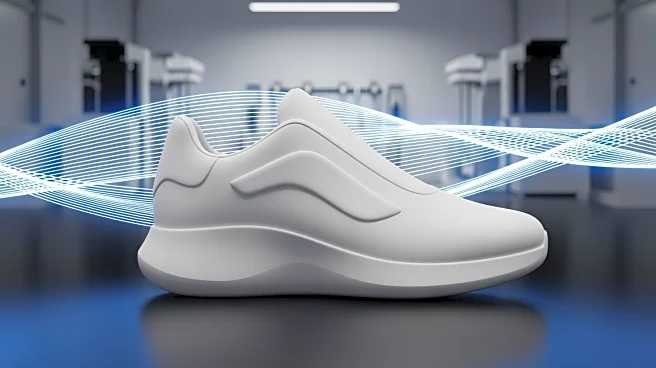
On, a Swiss athletic company, is significantly expanding its LightSpray shoe production technology by opening a new factory near Busan, South Korea. This facility is the second of its kind, following the initial factory in Zurich, Switzerland, which opened
in July 2025. The South Korean factory will house 32 fully automated robots, increasing On's global LightSpray production capacity by 30 times in 2026. The LightSpray technology, introduced in 2024, allows for automated shoe production, and the new facility marks a major step in scaling this technology globally. The choice of South Korea is strategic due to the country's leadership in robotics and automation, as well as On's existing partnerships in the region. The factory will produce the LightSpray Cloudmonster 3 Hyper shoe, set for a limited release in North America on March 5, with a global launch on April 16.
Why It's Important?
The expansion of On's LightSpray technology is significant for the athletic footwear industry, as it represents a shift towards more efficient and sustainable manufacturing processes. By automating production, On can reduce labor costs and increase output, potentially leading to lower prices for consumers and higher profit margins for the company. The use of robotics also ensures consistent quality and allows for rapid scaling of production to meet global demand. This move could set a precedent for other companies in the industry to adopt similar technologies, driving innovation and competition. Additionally, the strategic location in South Korea positions On to leverage advanced robotics expertise and expand its market presence in Asia.
What's Next?
On plans to continue expanding its LightSpray technology globally, with future production facilities planned for the Americas and Europe. The company aims to make LightSpray technology available to a broader audience beyond elite athletes, potentially exploring applications in other product categories. As production scales, On will likely focus on optimizing its supply chain and distribution networks to support increased output. The success of the South Korean factory could influence On's decisions on future locations and partnerships, as well as its approach to innovation and sustainability in manufacturing.