


What's Happening?
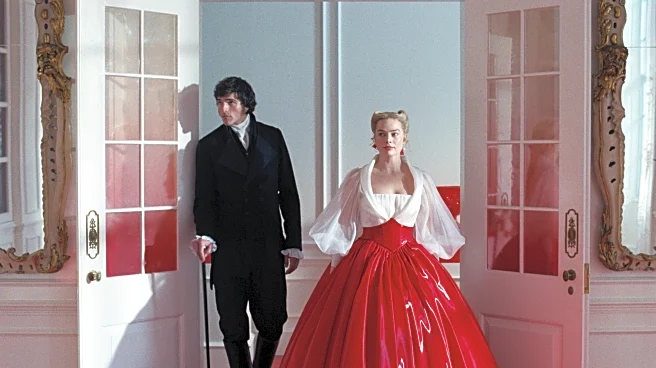
Emerald Fennell's adaptation of 'Wuthering Heights' has stirred controversy due to its unconventional approach to the classic novel. The film, set to release soon, has polarized audiences with its decision to focus only on the first half of Emily Brontë's novel, omitting significant plotlines and characters. Fennell, known for her unique directorial style, has emphasized that her version is more of an interpretation rather than a faithful adaptation. The film features extravagant costumes designed by Jacqueline Durran, drawing inspiration from mid-20th century cinema rather than the novel's original period setting. This creative choice has been both praised and criticized, with some appreciating the cinematic homage and others questioning the departure
from historical accuracy.
Why It's Important?
The adaptation's release highlights ongoing debates in the film industry about the balance between artistic interpretation and fidelity to source material. Fennell's approach challenges traditional expectations of literary adaptations, potentially influencing future projects. The film's reception could impact how studios and directors approach classic literature, weighing the risks and rewards of creative liberties. Additionally, the film's focus on visual and emotional storytelling over strict adherence to the original text may appeal to a broader audience, including those less familiar with the novel. This could lead to increased interest in both the film and the original literary work, affecting box office performance and literary sales.
What's Next?
As the film approaches its release, critical and audience reactions will play a crucial role in determining its success. Positive reviews could bolster Fennell's reputation as a director willing to take risks, while negative feedback might prompt discussions about the limits of artistic freedom in adaptations. The film's performance could also influence future projects, encouraging filmmakers to explore more creative interpretations of classic works. Additionally, the film's reception may spark further debate among literary and film communities about the role of adaptations in preserving or reimagining cultural heritage.