






What's Happening?
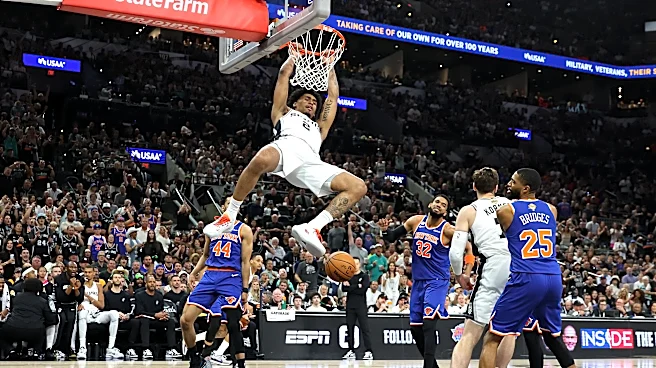
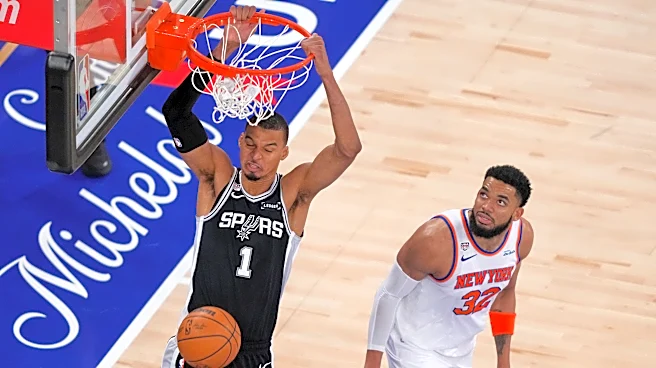
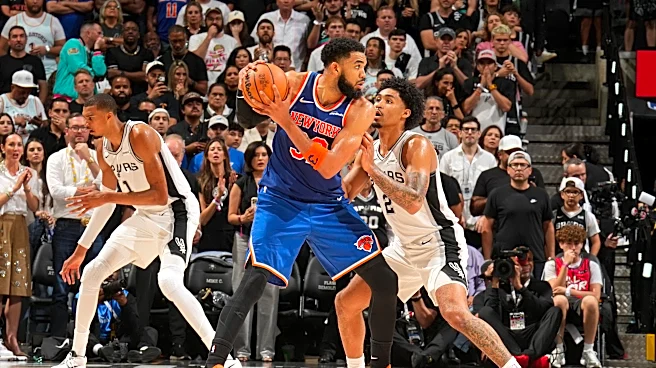
The San Antonio Spurs made key strategic adjustments to secure a 115-111 victory over the New York Knicks in Game 3 of the NBA Finals. After losing the first two games, the Spurs focused on limiting Karl-Anthony Towns' impact by assigning different defenders
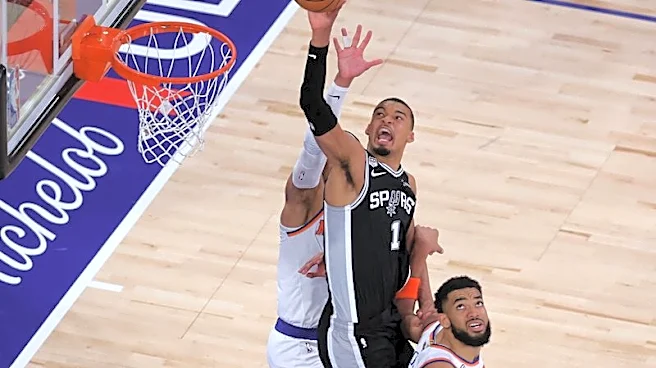
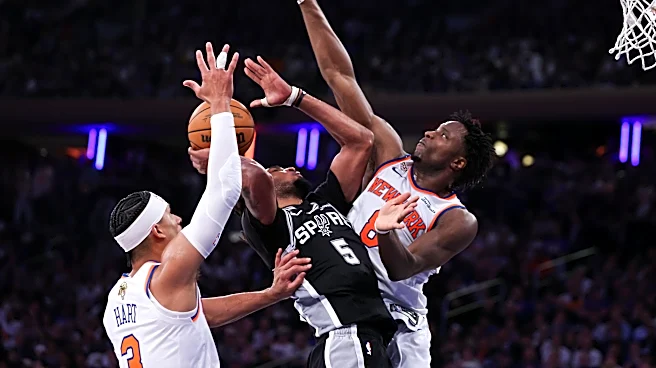
to him, reducing his scoring to 11 points. Victor Wembanyama played a crucial role by shifting his focus to aggressive inside scoring, contributing significantly to the Spurs' win. Additionally, Stephon Castle improved his decision-making, reducing turnovers and enhancing the team's efficiency. These changes allowed the Spurs to avoid a 3-0 series deficit and keep their championship hopes alive.
Why It's Important?
The Spurs' victory in Game 3 highlights the importance of strategic flexibility and player adaptability in high-stakes competitions. By effectively countering Karl-Anthony Towns, the Spurs demonstrated their ability to adjust defensively, which is crucial for their continued success in the series. Victor Wembanyama's performance underscores his potential as a key player in the league, while Stephon Castle's improved play indicates the team's depth and resilience. This win not only boosts the Spurs' confidence but also sets the stage for a more competitive series, potentially influencing the outcome of the NBA Finals and the Finals MVP race.
What's Next?
Looking ahead, the Spurs will aim to build on their Game 3 success by maintaining their defensive adjustments and leveraging Wembanyama's scoring prowess. The Knicks, meanwhile, will need to find ways to counter the Spurs' strategies and maximize Towns' offensive contributions. The upcoming games will be critical in determining the series' momentum, with both teams likely to make further tactical changes. The outcome of the series could have significant implications for player legacies and team dynamics, as well as influence future strategies in the NBA.