

What's Happening?
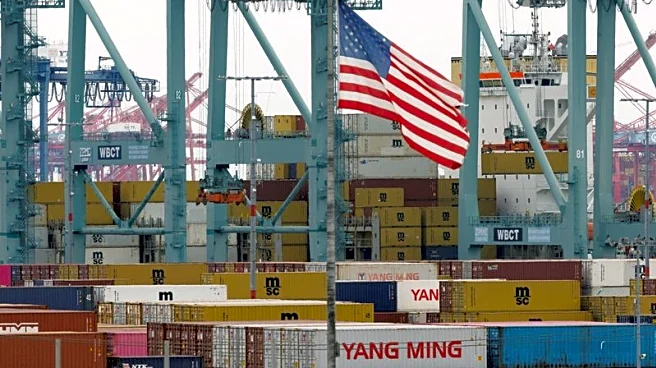
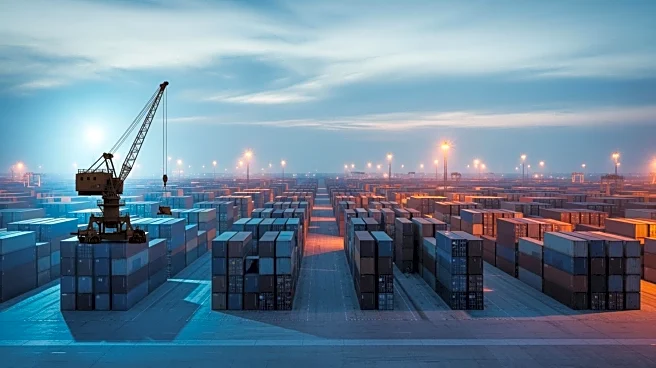
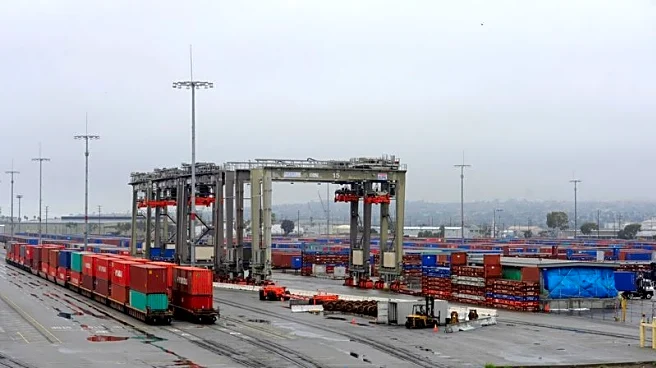
The Port of Los Angeles, the busiest port in the United States, is experiencing a significant decline in cargo volume, attributed to a drop in exports to China. New data indicates that commitments made by China to purchase more U.S. agricultural products have not been fulfilled, leading to a 12% year-over-year decrease in processed cargo volume. The decline is particularly evident in agricultural exports, such as soybeans, which have seen an 80% reduction. This downturn is part of a broader trend affecting major U.S. ports, with containerized exports to China down 26% last year. The situation is exacerbated by competition from countries like Argentina and Brazil, which have secured contracts for soybean exports to China.
Why It's Important?
The slump in freight
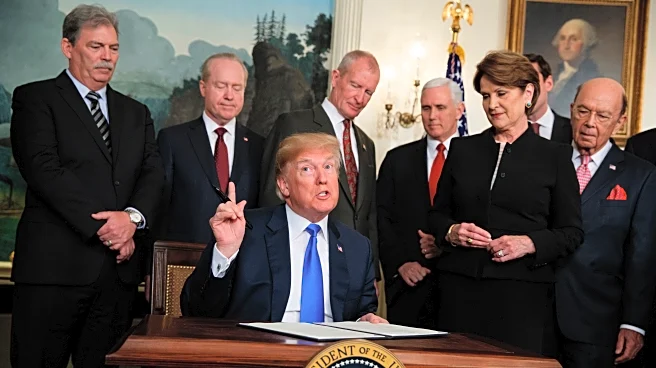
trade at the Port of Los Angeles highlights the ongoing challenges in U.S.-China trade relations and their impact on the American economy. The decline in exports, particularly agricultural products, affects U.S. farmers and the broader agricultural sector, which relies heavily on international markets. The reduced cargo volume also has implications for the logistics and transportation industries, potentially leading to job losses and economic downturns in regions dependent on port activities. The situation underscores the need for strategic trade policies and diversification of export markets to mitigate the risks associated with reliance on a single trading partner.
What's Next?
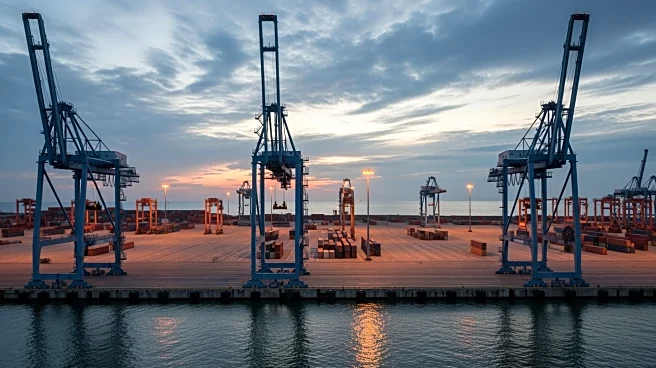
The U.S. may need to explore new trade agreements and partnerships to offset the decline in exports to China. Efforts to increase domestic consumption of agricultural products or find alternative international markets could help stabilize the sector. Additionally, the Port of Los Angeles and other affected ports may need to adapt their operations to handle changing trade patterns, potentially investing in infrastructure improvements or diversifying the types of goods they handle. The situation also calls for continued dialogue between the U.S. and China to address trade imbalances and explore opportunities for collaboration.