






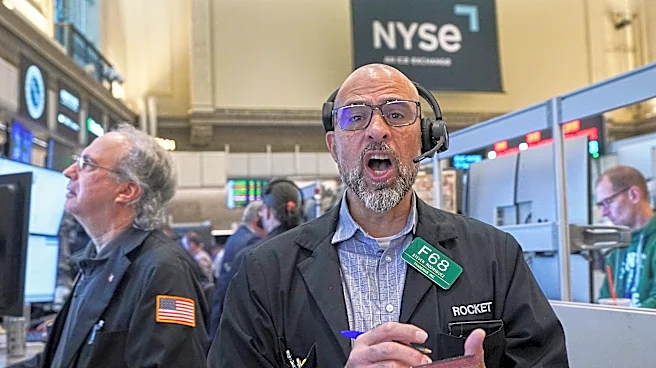
What's Happening?
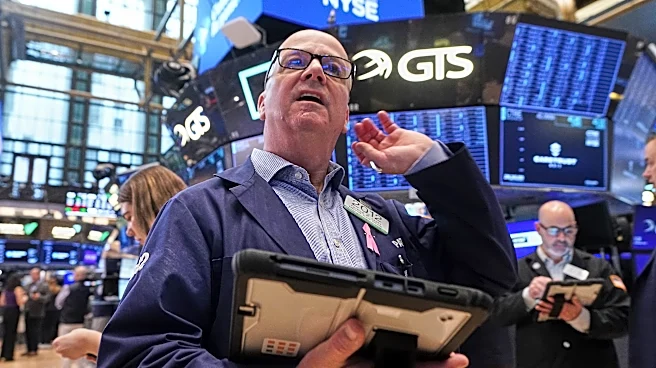
The U.S. stock market experienced a significant downturn as rising bond yields sparked investor panic. Yields on 30-year Treasurys have surged above 5%, while 10-year rates have increased by over 20 basis points to 4.59% since early May. This rise in yields led
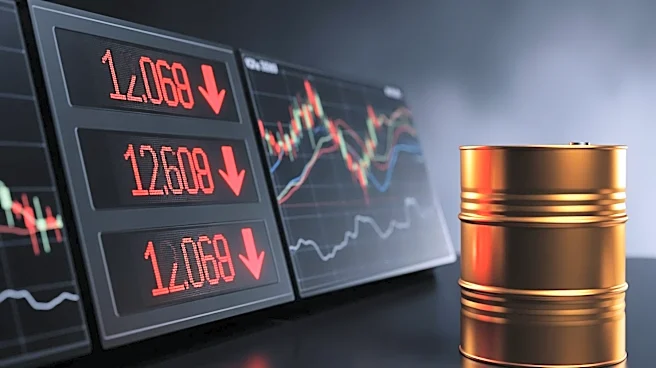
to a drop in major stock indices, with the Dow Jones Industrial Average falling over 500 points and the Nasdaq and S&P 500 each losing more than 1%. The increase in bond yields is attributed to concerns over inflation, driven by surging oil prices amid the ongoing US-Iran conflict. The conflict has caused a spike in energy costs, contributing to a 3.8% year-over-year increase in consumer prices as of April, the highest since 2023.
Why It's Important?
The rise in bond yields has significant implications for the U.S. economy and stock market. Higher yields increase borrowing costs for companies, potentially stifling growth and reducing future investments. This is particularly detrimental to growth stocks, as their future earnings are devalued when compared to risk-free rates. Additionally, the Federal Reserve's stance under incoming Chair Kevin Warsh, who opposes expanding the Fed's balance sheet, could further exacerbate the situation by reducing demand for Treasurys, leading to even higher yields. The ongoing inflation concerns and elevated oil prices create a challenging environment for investors, with potential long-term impacts on corporate fundamentals and market stability.
What's Next?
The trajectory of bond yields and their impact on the stock market will depend on several factors, including the duration of the US-Iran conflict and the Federal Reserve's policy decisions. If the conflict continues, oil prices may remain high, sustaining inflationary pressures and keeping yields elevated. The Federal Reserve's approach to asset purchases and interest rates will also play a crucial role in shaping market dynamics. Investors will closely monitor these developments, as well as any potential government interventions to stabilize the economy. The situation remains fluid, with the potential for further market volatility in the coming months.