





What's Happening?
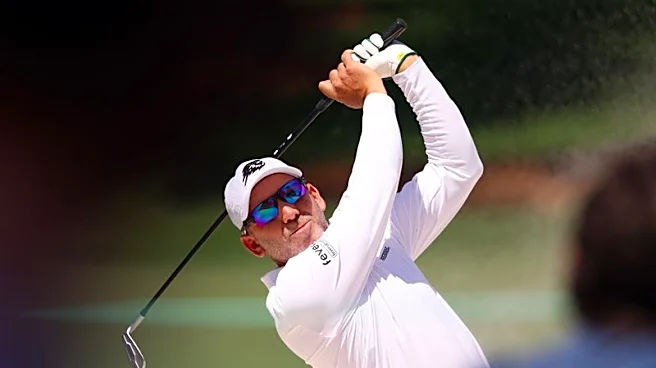
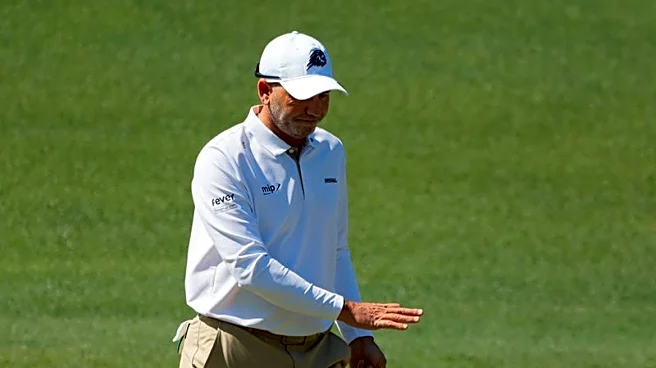
Sergio Garcia, a professional golfer from Spain, experienced a notable incident during the 2026 Masters Tournament at Augusta National Golf Club. On the second hole, Garcia broke his driver in frustration after a poor tee shot, leading to a code-of-conduct
warning issued by Geoff Yang, chairman of the competitions committee. This marked the first time such a warning was given at the Masters, as the PGA Tour is developing a code-of-conduct policy for competitions. Garcia's actions included slamming his club into the turf and damaging a table with a cooler, resulting in the driver head detaching from the shaft. Despite the incident, Garcia continued his round without a driver, opting to use a 3-wood instead. He later carried fellow golfer Jon Rahm's clubs briefly, creating a lighter moment during the event.
Why It's Important?
The incident involving Sergio Garcia highlights the implementation of a new code-of-conduct policy in professional golf, starting with the Masters Tournament. This policy aims to maintain decorum and sportsmanship among players, with potential penalties for violations. Garcia's actions, which led to the first warning under this policy, underscore the challenges athletes face in managing emotions during high-stakes competitions. The introduction of this policy could influence player behavior and tournament dynamics, ensuring a more disciplined environment. Additionally, Garcia's history of outbursts on the golf course raises questions about the enforcement and effectiveness of such policies in curbing unsportsmanlike conduct.
What's Next?
The PGA Tour plans to extend the code-of-conduct policy to other major tournaments, including the PGA Championship. Future violations could result in penalties, such as a two-shot penalty for a second offense and disqualification for a third. This development may prompt players to adjust their behavior to avoid penalties, potentially impacting their performance and standings. Tournament organizers and officials will likely monitor player conduct closely, ensuring adherence to the new standards. The policy's implementation could lead to discussions among players, officials, and fans about its implications for the sport's culture and competitiveness.