



What's Happening?
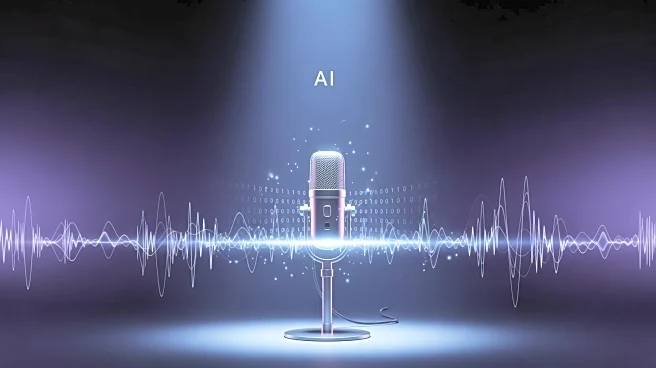
Sienna Rose, a singer with nearly three million monthly listeners on Spotify, has gained significant attention with her jazz-infused soul songs, including the popular track 'Into the Blue.' Despite her rising popularity, there are growing suspicions that Sienna Rose may not be a real person but rather an AI-generated artist. Streaming service Deezer has flagged many of her songs as computer-generated, citing the presence of AI artifacts such as a telltale hiss in the tracks. Additionally, Rose lacks a social media presence, has never performed live, and has released an unusually high number of songs in a short period. Her music, characterized by smooth vocals and jazzy guitar lines, has been compared to artists like Norah Jones and Alicia Keys,
but some listeners have noted a 'generic' sound, leading to further speculation about her authenticity.
Why It's Important?
The case of Sienna Rose highlights the growing influence of AI in the music industry, raising questions about the authenticity and originality of music. As AI technology becomes more sophisticated, it poses a challenge to traditional musicians and the industry at large. The potential for AI-generated music to compete with human artists could disrupt the music business model, as the costs of launching AI acts are significantly lower than those for human artists. This development could lead to a shift in how music is produced and consumed, with implications for copyright laws and the valuation of artistic creativity. The situation also underscores the need for transparency and regulation in the use of AI in creative fields.
What's Next?
The music industry may need to address the ethical and legal implications of AI-generated music. This could involve developing new guidelines and regulations to ensure transparency and protect the rights of human artists. Streaming platforms might enhance their detection tools to better identify AI-generated content. Additionally, there could be increased scrutiny and debate over the role of AI in creative industries, potentially leading to policy changes. The response from music fans and industry stakeholders will be crucial in shaping the future landscape of music production and distribution.
Beyond the Headlines
The emergence of AI-generated artists like Sienna Rose raises broader cultural and ethical questions about the nature of creativity and authenticity. As AI continues to blur the lines between human and machine-generated art, society may need to reconsider what constitutes genuine artistic expression. This development could also influence consumer preferences, as audiences may begin to value authenticity and emotional depth over technical perfection. The situation highlights the potential for AI to transform not only the music industry but also other creative sectors, prompting a reevaluation of the role of technology in human culture.