
What's Happening?
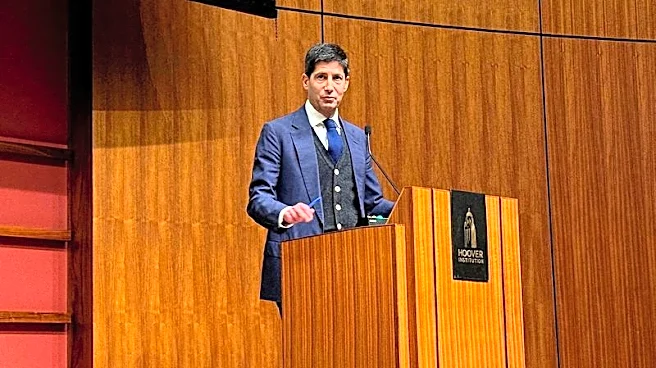
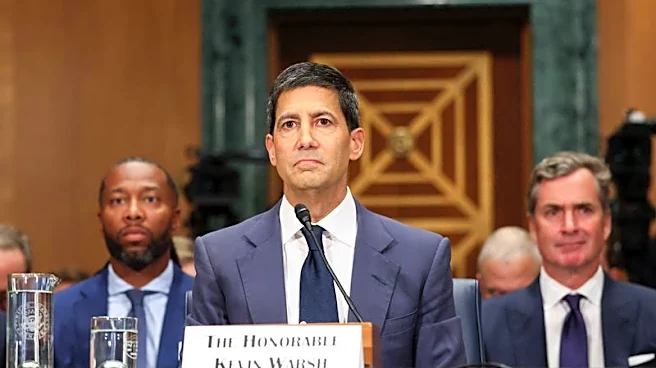
Kevin Warsh, nominated by President Trump to lead the Federal Reserve, has proposed a shift in how inflation is measured by the central bank. During his Senate confirmation hearing, Warsh emphasized the need
for a new framework that includes 'trimmed averages' to better capture inflation trends. This method involves excluding outlier data, both high and low, to provide a clearer picture of price changes. The Dallas and Cleveland Federal Reserves already use such trimmed average inflation gauges. Warsh argues that these measures show a more favorable inflation trend, with the Dallas Fed's trimmed mean PCE at 2.3% and the Cleveland Fed's median PCE at 2.8%, both lower than the core PCE's current 3%. Warsh's approach suggests a potential shift in the Fed's monetary policy, which traditionally relies on the Personal Consumption Expenditures index.
Why It's Important?
Warsh's proposal could significantly impact U.S. monetary policy. By adopting trimmed averages, the Federal Reserve might alter its approach to interest rates, potentially affecting economic growth and inflation control. This change could lead to a more nuanced understanding of inflation, influencing decisions on whether to raise or lower interest rates. The proposal has sparked debate among economists, with some cautioning against the potential biases of trimmed measures. Any adjustment in inflation measurement is likely to provoke market reactions, as investors and policymakers adjust to new benchmarks. Warsh's approach reflects a broader trend of re-evaluating traditional economic indicators in light of evolving economic conditions.
What's Next?
If confirmed, Warsh's leadership could usher in a period of experimentation with inflation metrics at the Federal Reserve. This may involve a broader evaluation of various inflation measures to determine the most accurate reflection of economic conditions. The Fed's potential shift in focus could lead to changes in interest rate policies, impacting everything from consumer loans to business investments. Stakeholders, including financial markets and policymakers, will closely monitor these developments, as any changes could have wide-ranging implications for the U.S. economy.