
What's Happening?
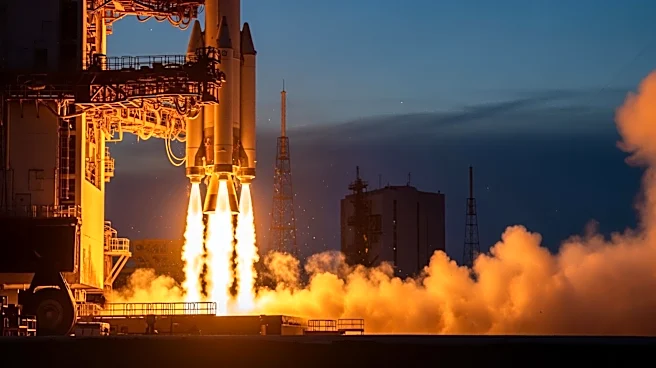
SpaceX is set to conduct multiple Starlink satellite launches this week, marking a busy period for the company and the global space industry. On June 3, SpaceX will launch Starlink Group 10-43 from Cape
Canaveral, Florida, followed by another launch of Starlink Group 17-47 from Vandenberg Space Force Base in California. Both missions will utilize Falcon 9 rockets, with the boosters scheduled to land on droneships. This activity is part of a broader schedule that includes recent launches, such as the Starlink Group 10-53 and Group 17-41, and upcoming international launches by China and South Korea. The Chinese Aerospace Science and Technology Corporation (CASC) has also been active, launching a new variant of the Long March rocket and planning further missions.
Why It's Important?
The series of launches by SpaceX underscores the company's aggressive expansion of its Starlink satellite constellation, which aims to provide global broadband internet coverage. This expansion is significant for the telecommunications industry, potentially disrupting traditional internet service providers by offering high-speed internet access in remote and underserved areas. Additionally, the global nature of these launches highlights the increasing competition and collaboration in the space industry, with countries like China and South Korea also advancing their space capabilities. This competitive environment could lead to technological advancements and more cost-effective access to space.
What's Next?
Following these launches, SpaceX and other international space agencies will continue to expand their satellite networks. SpaceX's ongoing Starlink deployments are expected to enhance global internet connectivity, while other countries' launches may focus on various objectives, including defense and scientific research. The outcomes of these missions could influence future space policy and international cooperation in space exploration. Stakeholders in the telecommunications and aerospace industries will likely monitor these developments closely, as they could impact market dynamics and regulatory frameworks.