
What's Happening?
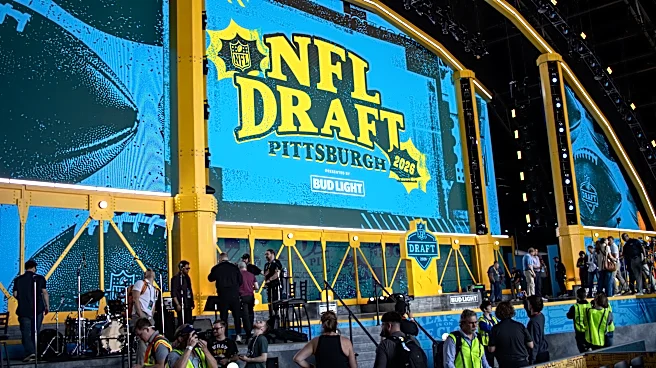
The NFL Draft's first day concluded with unexpected selections, notably the Los Angeles Rams choosing quarterback Ty Simpson from Alabama with the 13th overall pick. Simpson, who had only one starting
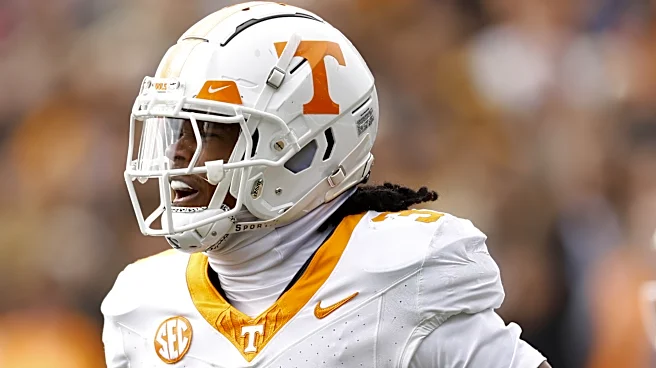
season with Alabama, was not widely regarded as a first-round talent. His selection was a surprise, as the Rams have rarely made first-round picks in the past decade. Other unexpected first-round picks included Clemson's Blake Miller, Georgia Tech's Keylan Rutledge, and Clemson's Peter Woods. As the draft moves into its second day, teams like the San Francisco 49ers, who hold the first pick of the second round, are poised to select from a pool of high-caliber players. Notable prospects include Tennessee cornerbacks Colton Hood and Jermod McCoy, Toledo safety Emmanuel McNeil-Warren, and Texas linebacker Anthony Hill Jr.
Why It's Important?
The unexpected selections in the first round have shifted the dynamics of the NFL Draft, creating opportunities for teams to acquire high-value players in the second round. This could significantly impact team strategies and roster compositions for the upcoming season. The Rams' choice of Ty Simpson suggests a long-term investment in developing a quarterback under the tutelage of MVP Matthew Stafford. Meanwhile, teams with early second-round picks, like the 49ers, can capitalize on the availability of top-tier talent that was expected to be selected earlier. This draft's surprises may lead to strategic adjustments across the league, influencing team performances and competitive balance in the NFL.
What's Next?
As the draft continues, teams will focus on filling key roster gaps with the remaining high-quality prospects. The second round will likely see a flurry of activity as teams aim to secure players who can make immediate impacts. The decisions made in this round could have long-term implications for team success and player development. Additionally, the unexpected first-round picks may prompt teams to reassess their scouting and evaluation processes, potentially leading to changes in how future drafts are approached.