




What's Happening?
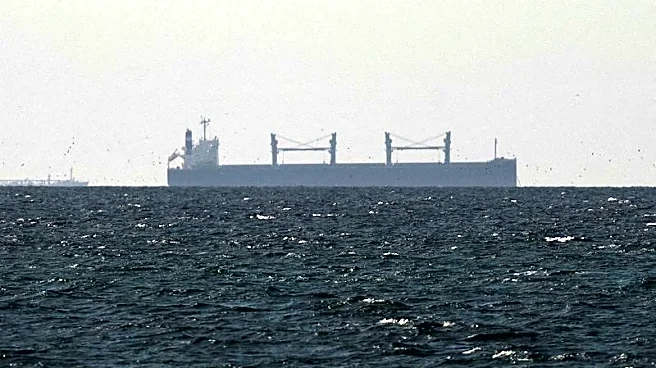
Oil prices have fallen sharply following Iran's announcement that the Strait of Hormuz is open to commercial traffic during a ceasefire between Israel and Lebanon. This development has led to a decrease in Brent futures to around $90 a barrel and U.S.
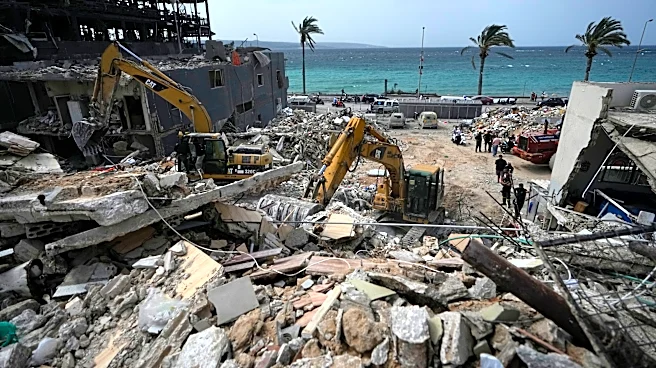
crude to under $85 a barrel. The national average for gasoline, currently above $4 per gallon, is expected to drop below $4 soon, potentially reaching $3.65 to $3.85 per gallon in the coming weeks. The decline in oil prices is attributed to the temporary ceasefire and the reopening of the Strait of Hormuz, which has eased supply fears. However, the full impact on gas prices may take time due to existing high costs at gas stations and the need for oil and gas facilities in the Middle East to recover from recent disruptions.
Why It's Important?
The drop in oil prices is significant for U.S. consumers who have been facing high gasoline prices due to ongoing tensions in the Middle East. Lower gas prices could alleviate financial pressure on households and businesses, potentially boosting consumer spending in other areas. However, the situation remains volatile, and any escalation in the Middle East conflict could reverse the current trend. The reopening of the Strait of Hormuz is a positive step, but the long-term stability of oil prices will depend on the resolution of geopolitical tensions and the recovery of damaged oil infrastructure.
What's Next?
If the ceasefire holds and the Strait of Hormuz remains open, gas prices are expected to continue decreasing over the next few weeks. However, a full recovery to pre-conflict price levels may take several months, as damaged oil facilities in the Middle East require significant repairs. The U.S. government and international partners may continue to monitor the situation closely, with potential interventions to stabilize the oil market if necessary. Consumers can expect gradual relief at the pump, but should remain cautious of potential price fluctuations due to geopolitical developments.