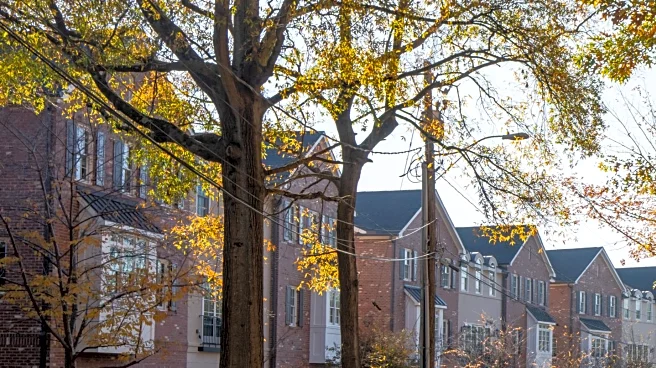




What's Happening?
The housing market is experiencing a significant shift as homebuilders are reducing prices on new homes more aggressively than homeowners are on existing homes. According to a report by Realtor.com, nearly 20% of new homes saw price reductions in the fourth quarter of 2025, compared to about 18% for existing homes. This trend indicates a potential buyer's market as home prices decline. The affordability crisis is largely driven by high mortgage rates, which remain around 6%, and the median U.S. home price of approximately $400,000. This situation has left many American families unable to afford homeownership, as highlighted by Stuart Miller, CEO of Lennar, a major homebuilder. Despite the price cuts, affordability remains a challenge due to the high costs
associated with down payments and the lack of savings among many potential buyers.
Why It's Important?
The ongoing affordability crisis in the housing market has significant implications for the U.S. economy and society. As home prices drop, it could signal a shift towards a buyer's market, potentially increasing homeownership opportunities for those who can afford it. However, the high mortgage rates and substantial down payment requirements continue to exclude many from the market. This situation underscores the broader economic challenges faced by average American families, who are struggling to achieve the traditional goal of homeownership. The price cuts in new homes may provide some relief, but the overall affordability issue remains a barrier to economic mobility and stability for many households.
What's Next?
As the housing market continues to adjust, homebuilders may further reduce prices or offer additional incentives to attract buyers. The market dynamics could lead to increased competition among builders and potentially more favorable conditions for buyers. However, unless mortgage rates decrease or economic conditions improve, the affordability crisis is likely to persist. Policymakers and industry leaders may need to explore solutions to address the underlying issues of high housing costs and limited financial resources for potential buyers.