



What's Happening?
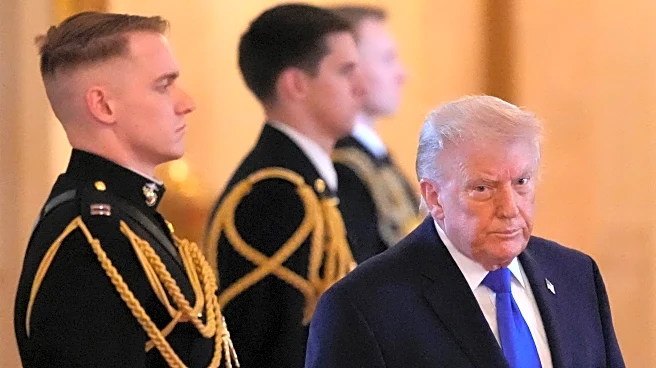
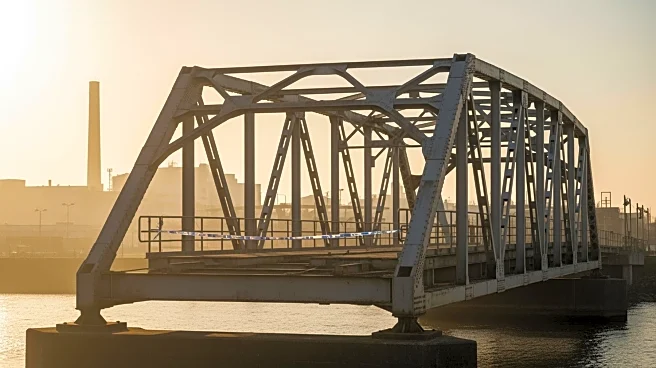
President Trump has expressed opposition to the opening of the Gordie Howe International Bridge, a new infrastructure project linking Detroit and Windsor, Ontario. The bridge, which is largely funded by Canada, was initially supported by Trump during
his first term as a vital economic link. However, he recently criticized the project, claiming the United States gains 'absolutely nothing' from it. This statement contradicts the 2012 agreement between Michigan and Canada, which ensures that Michigan will share in future revenue once construction costs are recouped through tolls. The bridge is expected to enhance trade efficiency and reduce congestion at the existing Ambassador Bridge, which is currently the only crossing for motor vehicles between Michigan and Ontario.
Why It's Important?
The Gordie Howe International Bridge is a significant infrastructure project that could bolster trade between the United States and Canada. By providing a modern trade artery, the bridge is expected to alleviate bottlenecks and support just-in-time supply chains crucial to the manufacturing sector. Blocking the project could harm U.S. competitiveness and economic growth, particularly in Michigan, where a substantial portion of the GDP is derived from foreign trade. The bridge is projected to generate significant transportation savings and improve trade efficiency, making it a critical component of the region's economic infrastructure.
What's Next?
If President Trump continues to oppose the bridge, it could lead to political and economic repercussions. Stakeholders, including local politicians and business leaders, may advocate for the project's completion, emphasizing its economic benefits. The situation could also prompt discussions about U.S.-Canada trade relations and infrastructure investment priorities. Additionally, the opposition may be perceived as a political maneuver, potentially influencing public opinion and future policy decisions.