





What's Happening?
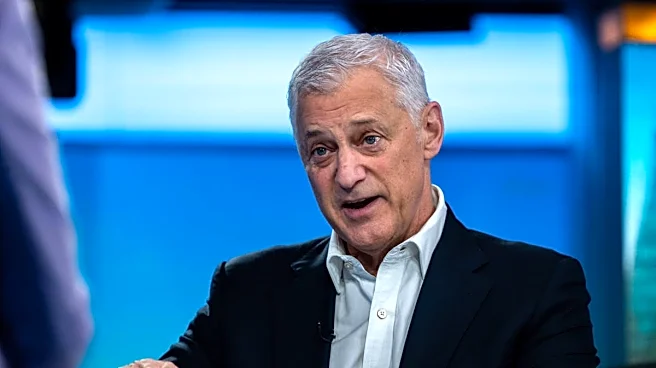
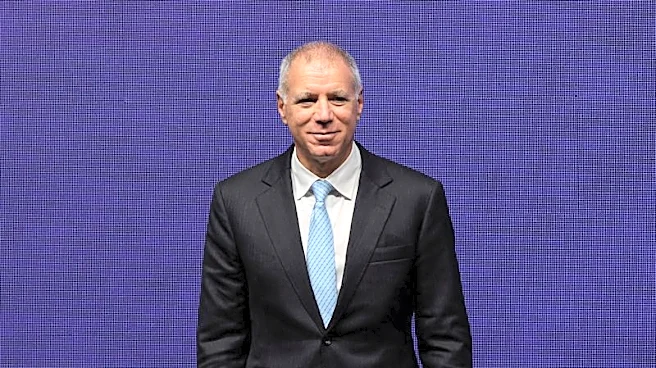
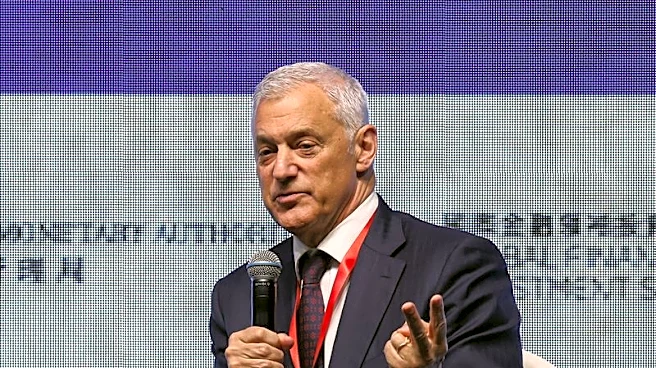
Bill Winters, the CEO of Standard Chartered PLC, faced significant backlash after comments made at an investor conference regarding the impact of artificial intelligence on the workforce. Winters suggested that AI would replace 'lower-value human capital,'
leading to the elimination of approximately 8,000 support roles over the next four years. His remarks, particularly the characterization of certain roles as 'lower value,' drew criticism from various quarters, including former Singapore President Halimah Yacob. In response, Winters took to LinkedIn to clarify and apologize for his comments, emphasizing the bank's commitment to helping employees transition to higher-value roles. Despite his attempts to mitigate the fallout, the comments have sparked a broader discussion on the implications of AI-driven job cuts.
Why It's Important?
The controversy surrounding Winters' remarks highlights the growing tension between technological advancement and job security. As AI continues to be integrated into various industries, the potential for significant job displacement becomes a pressing concern. This situation underscores the need for companies to manage workforce transitions carefully and consider the human impact of automation. The backlash also reflects broader societal concerns about the devaluation of certain job roles and the ethical considerations of treating workers as mere capital. The incident serves as a reminder of the importance of communication and empathy in leadership, especially when discussing sensitive topics like job cuts.
What's Next?
Standard Chartered's approach to managing the transition of its workforce will be closely watched by industry peers and stakeholders. The bank's commitment to helping employees move into higher-value roles will be tested as it implements AI-driven changes. Additionally, the broader financial industry may face increased scrutiny regarding how it handles similar transitions. Stakeholders, including employees, unions, and policymakers, may push for more robust measures to protect workers and ensure fair treatment during technological shifts. The incident may also prompt other companies to reassess their communication strategies and workforce management plans in the context of AI adoption.