

What's Happening?
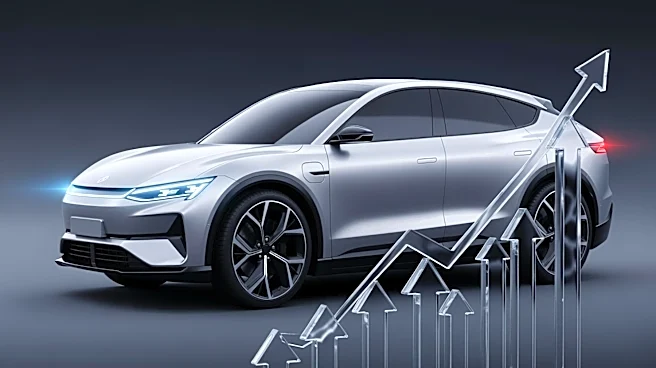
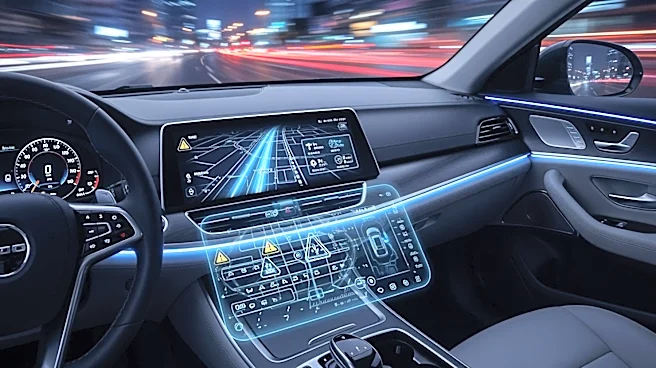
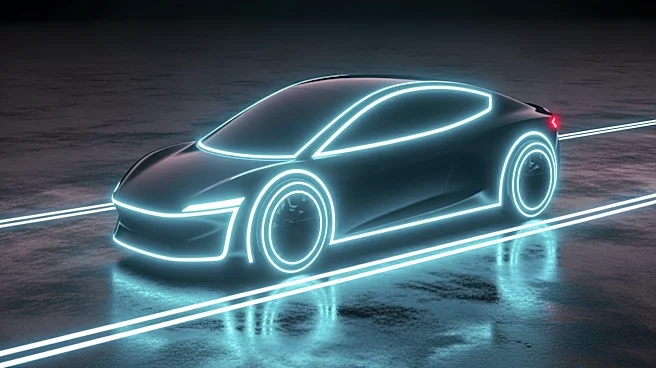
Tesla, led by Elon Musk, is facing challenges in its self-driving vehicle expansion due to recent federal safety recalls. The National Highway Traffic Safety Administration (NHTSA) ordered Tesla to recall over 218,000 vehicles, including Model 3, Model Y,
Model S, and Model X, due to delayed rearview camera images that could increase crash risks. Tesla addressed this issue with a software update. Despite these setbacks, Musk remains optimistic about the future of Tesla's self-driving technology, predicting that AI will handle 90% of U.S. miles within a decade. Tesla has also received a permit to operate a ride-hailing service in Arizona but has not yet launched a driverless robotaxi service in California due to stricter regulations.
Why It's Important?
The development of self-driving technology is crucial for the future of transportation, with significant implications for safety, efficiency, and the automotive industry. Tesla's challenges highlight the regulatory and safety hurdles that must be overcome to achieve widespread adoption. The recalls underscore the importance of ensuring the safety of autonomous systems before they are deployed on a large scale. Successful implementation could revolutionize transportation, reduce accidents, and transform urban planning. However, the current setbacks may delay these potential benefits and impact Tesla's market position and consumer trust.
What's Next?
Tesla plans to expand its unsupervised self-driving service across the U.S. by the end of 2026. The company will need to address regulatory challenges and ensure the safety of its autonomous systems to gain approval in key markets like California. Ongoing scrutiny from federal regulators and competition from companies like Waymo will influence Tesla's strategy and timeline. The outcome of these efforts will determine the pace at which self-driving technology becomes a mainstream reality.