






What's Happening?
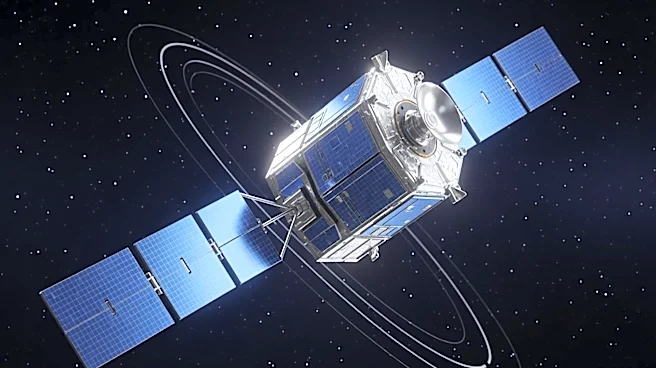
Blue Origin has successfully reused its New Glenn rocket, marking a significant achievement in its space exploration efforts. However, the mission faced a setback as the rocket failed to deliver its intended payload, a space-based cell tower, into the correct
orbit. The satellite, known as BlueBird 7, was placed into a lower than planned orbit, rendering it unable to sustain operations with its onboard thruster technology. Despite the successful landing of the rocket, the satellite will de-orbit, and the cost is expected to be covered by the company's insurance policy.
Why It's Important?
The successful reuse of the New Glenn rocket highlights Blue Origin's advancements in reusable space technology, which is crucial for reducing costs and increasing the frequency of space missions. However, the failure to deliver the payload underscores the challenges associated with deploying satellites for space-based cellular networks. This incident may impact AST SpaceMobile's plans to expand its cellular broadband network, potentially delaying the deployment of future satellites. The event also emphasizes the importance of precision in orbital placement for satellite operations.
What's Next?
Blue Origin and AST SpaceMobile will likely review the mission to identify the cause of the payload delivery failure and implement corrective measures for future launches. AST SpaceMobile is in production through BlueBird 32, with BlueBird 8 to 10 expected to be ready to ship in approximately 30 days. The company will continue its efforts to establish a space-based cellular network, which could revolutionize global connectivity. Stakeholders will be closely monitoring the developments to assess the impact on the broader satellite communications industry.