



What's Happening?
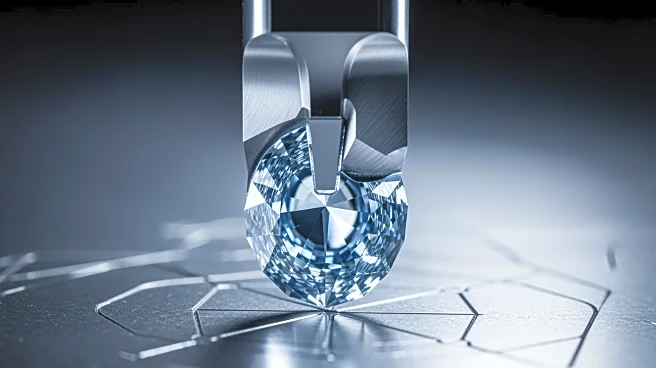
Researchers at The Hong Kong Polytechnic University (PolyU) have developed a novel machining technology that combines laser and magnetic fields to enhance diamond cutting processes. This new method, known as in-situ laser-magnetic dual-field assisted
diamond cutting (LMDFDC), aims to improve the precision and quality of machining high-performance materials. The technology addresses limitations of existing field-assisting techniques by synergizing the strengths of laser and magnetic fields, which traditionally have been used separately. The laser field softens hard materials, while the magnetic field reduces cutting force and enhances heat dissipation. This dual-field approach results in smoother surfaces and less subsurface damage, extending tool lifespan and reducing wear. The research, led by Prof. Sandy To Suet, is published in the International Journal of Extreme Manufacturing.
Why It's Important?
The development of LMDFDC technology is significant for industries that require ultra-precision machining, such as aerospace and energy sectors. High-performance materials, like high-entropy alloys, are increasingly used for their strength and stability, but they pose challenges for traditional machining methods. By improving machinability and reducing tool wear, this technology could lower manufacturing costs and increase efficiency. The dual-field approach also represents a breakthrough in understanding material transformations during machining, potentially leading to further innovations in manufacturing processes. This advancement could position PolyU and its research team at the forefront of precision manufacturing technology.
What's Next?
The research team is in the process of patenting the LMDFDC technology and plans to explore additional combinations of energy fields to develop more versatile machining methods. This could lead to broader applications across various industries that utilize high-performance materials. The ongoing research is supported by several funding bodies, including the National Natural Science Foundation of China and the Hong Kong Special Administrative Region Government. As the technology progresses, it may attract interest from global manufacturing companies seeking to enhance their production capabilities.