


What's Happening?
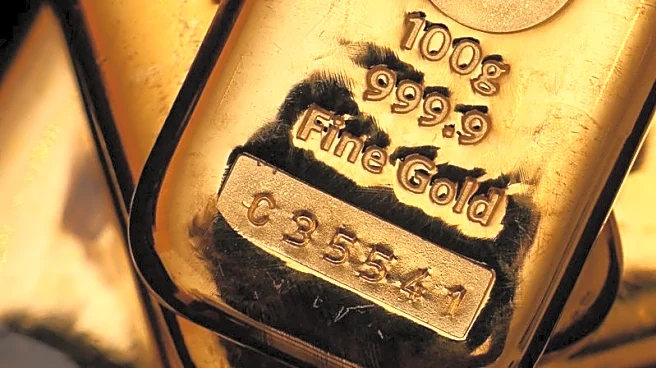
Gold prices have fallen significantly during the ongoing conflict in Iran, with the precious metal entering a bear market. Morgan Stanley's equity strategist, Mike Wilson, views this decline as a positive indicator for the U.S. stock market. The S&P 500-to-gold
ratio has increased, suggesting that investor confidence in equities remains strong despite geopolitical tensions. The drop in gold prices is attributed to potential government sales of gold reserves to cover war-related expenses, such as rising oil prices. This trend is seen as a sign that the U.S. may be gaining an advantage in the conflict, boosting investor sentiment.
Why It's Important?
The relationship between gold prices and the stock market is a key indicator of economic confidence. Gold is traditionally viewed as a safe-haven asset during times of uncertainty, so its decline suggests that investors are optimistic about the U.S. economy's resilience. This sentiment could lead to increased investment in equities, supporting economic growth. However, the situation also highlights the complex interplay between geopolitical events and financial markets, where shifts in one area can have significant ripple effects across global economies.
Beyond the Headlines
The current market dynamics underscore the importance of understanding the broader implications of geopolitical conflicts on financial markets. Investors and policymakers must navigate these complexities to make informed decisions. The situation also raises questions about the sustainability of relying on traditional safe-haven assets like gold in an increasingly interconnected global economy. As the conflict evolves, market participants will need to remain vigilant and adaptable to changing conditions.