







What's Happening?
The controlled environment agriculture (CEA) market is experiencing significant growth, with North America leading the charge. This growth is driven by the region's advanced technological infrastructure and increasing demand for locally sourced, pesticide-free
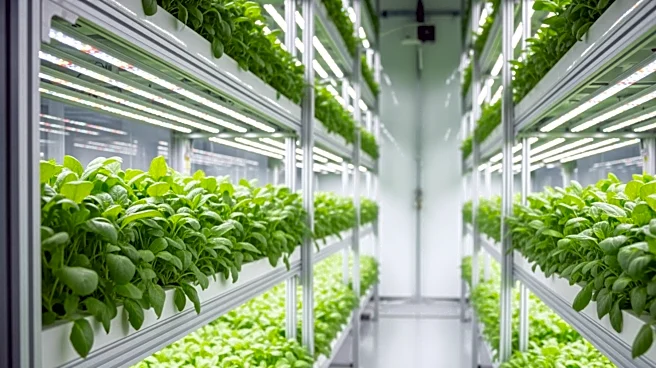
produce. The United States and Canada are at the forefront of adopting CEA technologies, particularly vertical farming and hydroponics. These methods allow for year-round cultivation, independent of external climate conditions, by regulating environmental factors such as temperature, humidity, and light. The market, valued at approximately USD 109,681.2 million in 2024, is projected to reach USD 321,681.5 million by 2034, with a compound annual growth rate (CAGR) of 11.36%. Key players in the market include AeroFarms, Gotham Greens, and Plenty (BrightFarms), among others.
Why It's Important?
The growth of the CEA market is crucial for addressing global food security concerns and minimizing environmental impacts. By enabling efficient use of resources, such as water, CEA technologies can significantly reduce the environmental footprint of agriculture. For instance, vertical farming can use up to 95% less water than traditional farming methods. This is particularly beneficial in regions facing water shortages. Additionally, the ability to produce food locally reduces the need for imports, enhancing food security and supporting local economies. The pharmaceutical industry is also increasingly adopting CEA for the cultivation of medicinal plants, ensuring a consistent and high-quality supply.
What's Next?
As the CEA market continues to expand, further technological advancements are expected in areas such as LED lighting, climate control, and automation. These innovations will likely enhance the efficiency and sustainability of CEA operations. The Asia-Pacific region is anticipated to see significant growth due to factors like rapid urbanization and a growing focus on food safety. Government initiatives promoting sustainable agriculture will also contribute to market expansion. The ongoing demand for natural and clean produce, coupled with stringent food safety regulations, will continue to drive the adoption of CEA technologies.