





What's Happening?
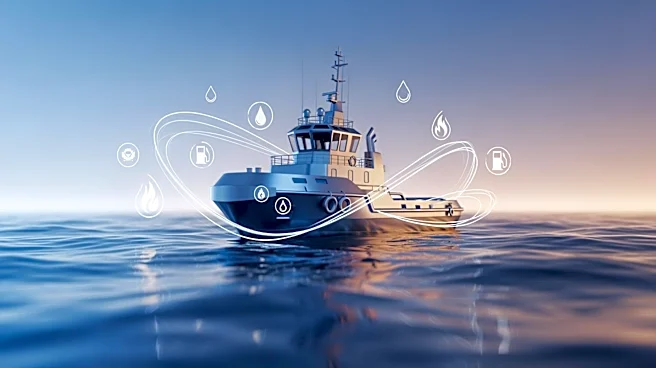
Damen Shipyards Group has unveiled a new range of fuel flexible tugs designed to meet the evolving energy needs of the maritime industry. The series, known as the Fuel Flexible (FF) Tugs, includes three types: the ASD Tug 2512 FF, ASD Tug 2713 FF, and
ASD Tug 3313 FF. These vessels are equipped to operate with diesel propulsion but are designed to be easily converted to use alternative fuels such as HVO, hybrid, or methanol as the industry transitions towards more sustainable energy sources. The modular energy concept allows for future retrofitting, enabling operators to adapt to new fuel types as they become commercially viable or mandatory. This development comes in response to increasing regulatory pressures, such as the EU Emissions Trading System, which is expanding to include maritime transportation.
Why It's Important?
The introduction of the Fuel Flexible Tugs is significant as it addresses the maritime industry's need to reduce carbon emissions and comply with stricter environmental regulations. As the EU Emissions Trading System expands, vessel operators will need to lower emissions and potentially purchase carbon credits, which could be costly. Damen's tugs offer a cost-effective solution by allowing operators to invest in vessels that are ready for future energy transitions without significant upfront costs. This flexibility is crucial as the industry faces uncertainty about which fuel types will dominate in the future. By providing a platform that can adapt to various energy sources, Damen is helping operators mitigate financial risks and ensure compliance with future regulations.
What's Next?
As the maritime industry continues to face regulatory changes, operators will likely need to make strategic decisions about fleet investments. The Damen Fuel Flexible Tugs provide a pathway for operators to future-proof their fleets, allowing them to switch to alternative fuels when it becomes economically viable. This adaptability will be crucial as regulations evolve and new technologies emerge. Stakeholders in the maritime industry, including towage companies and vessel owners, will need to monitor regulatory developments and market trends to determine the optimal timing for retrofitting their vessels. The success of Damen's initiative could influence other shipbuilders to adopt similar flexible designs, further driving the industry's transition to sustainable energy.